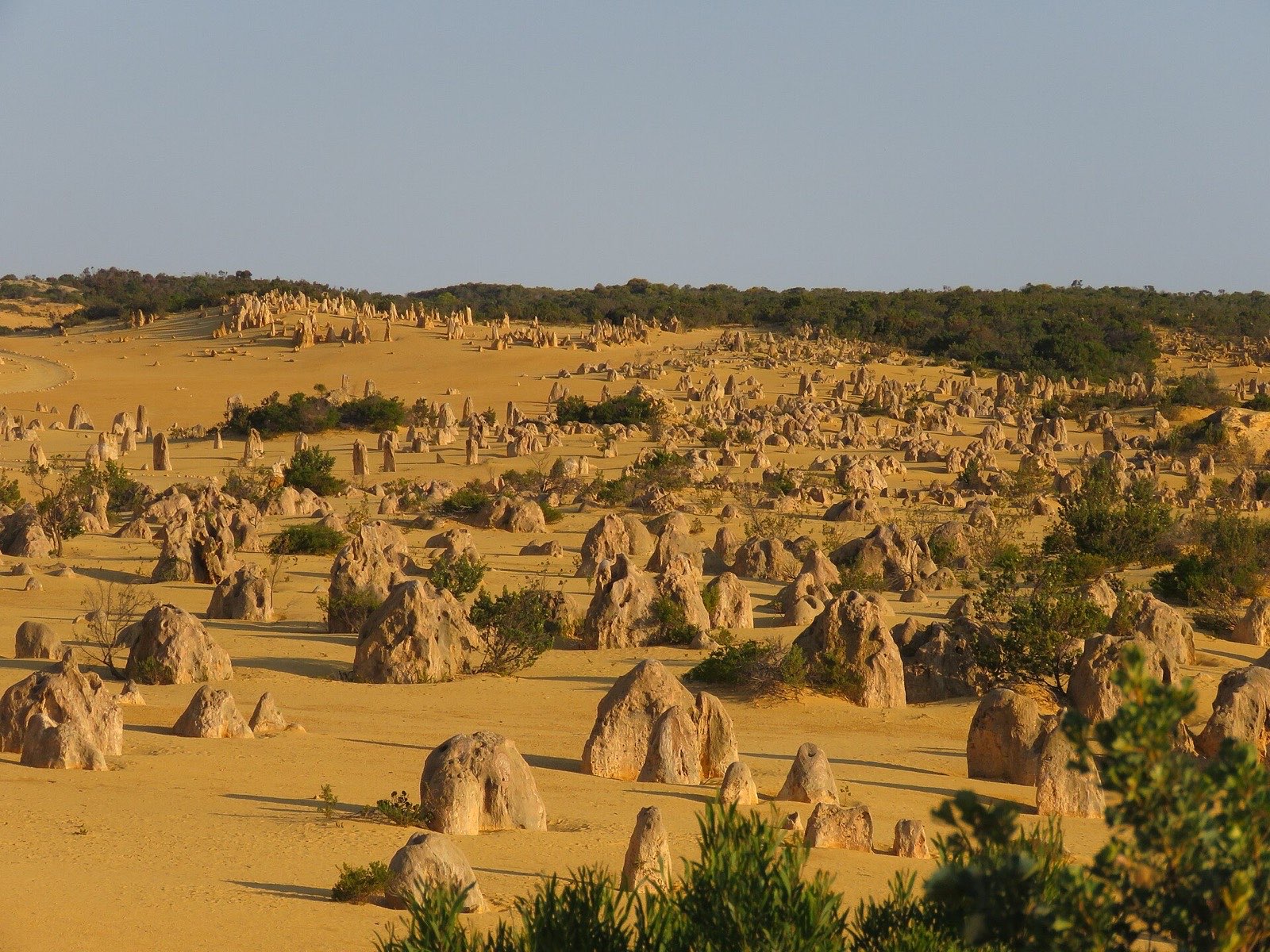
The Pinnacles in the evening sun, September 2023.
Case 04 / 09A forest of limestone, dated-30.6050° S, 115.1590° E

The Pinnacles

The Pinnacles in the evening sun, September 2023.

Location

Nambung National Park, WA

Rock

Tamala Limestone

Age

Pleistocene · formed ≈ 102 ka

Process

Karst dissolution

Status

Open · Pinnacles Desert

Overview

Thousands of limestone spires rise from yellow sand in the Nambung desert. In 2024 researchers finally put a date on them: most formed in a single wet pulse about 100,000 years ago.

102ka

U-Th/He age of pinnacle formation

5m

Maximum pinnacle height

5members

Units identified in the Tamala Limestone

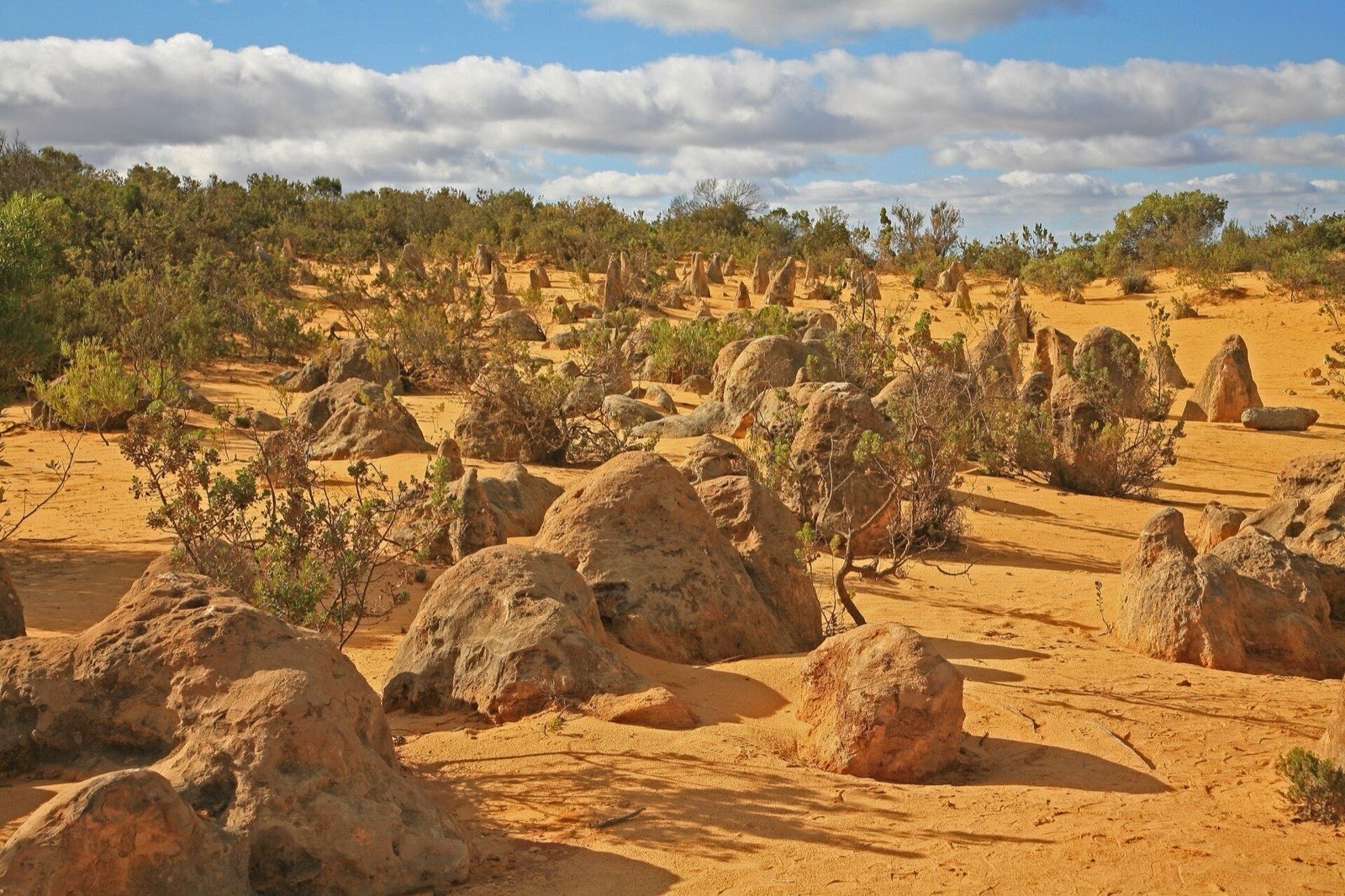
Pillars of Tamala Limestone, Nambung National Park.

Chapter 01

Swiss cheese

The Tamala Limestone is built from cemented coastal dunes. Rainwater carrying carbonic acid dissolved it from within; in the words of Curtin University's Milo Barham, the holes got so big that all that was left was the Pinnacles.
Pinnacle field and dune sand.

Chapter 02

Dated by iron

Matej Lipar and Milo Barham dated goethite nodules that grew on the pinnacles, using the helium produced by uranium and thorium decay. Published in Science Advances, the result points to formation around 102,000 years ago, in a very wet period lasting several thousand years.

Detail of a pinnacle cluster.

Chapter 03

A layered archive

Earlier mapping by Lipar and Webb divided the Tamala Limestone into five members spanning marine isotope stages 13 to 4. The intense karst that produced the pinnacle field falls between stages 7 and 4.

The Pinnacles in the evening sun, September 2023.

Chapter 04

An iron coat

As the landscape eroded, iron-rich goethite nodules grew on the pinnacles' surfaces. Those nodules became the clock: the helium locked inside them dates the moment the pillars formed.

Pillars of Tamala Limestone, Nambung National Park.

Chapter 05

Sand keeps moving

The desert is not finished. Dunes still drift across the site, burying some pillars and uncovering others, so the Pinnacles you see depend on the decade you visit.

Illustration · stage 1 / 4

How it forms

  1. 01

    Dunes

    Shell-rich sand blows inland from the coast and piles into dunes.

  2. 02

    Cement

    Rainwater dissolves some of the shell and re-deposits it, cementing the dunes into limestone.

  3. 03

    Dissolve

    Acidic rainwater eats holes through the rock, like Swiss cheese, during a very wet period.

  4. 04

    Pillars

    What resisted dissolution stands as pillars; wind strips the loose sand from around them.

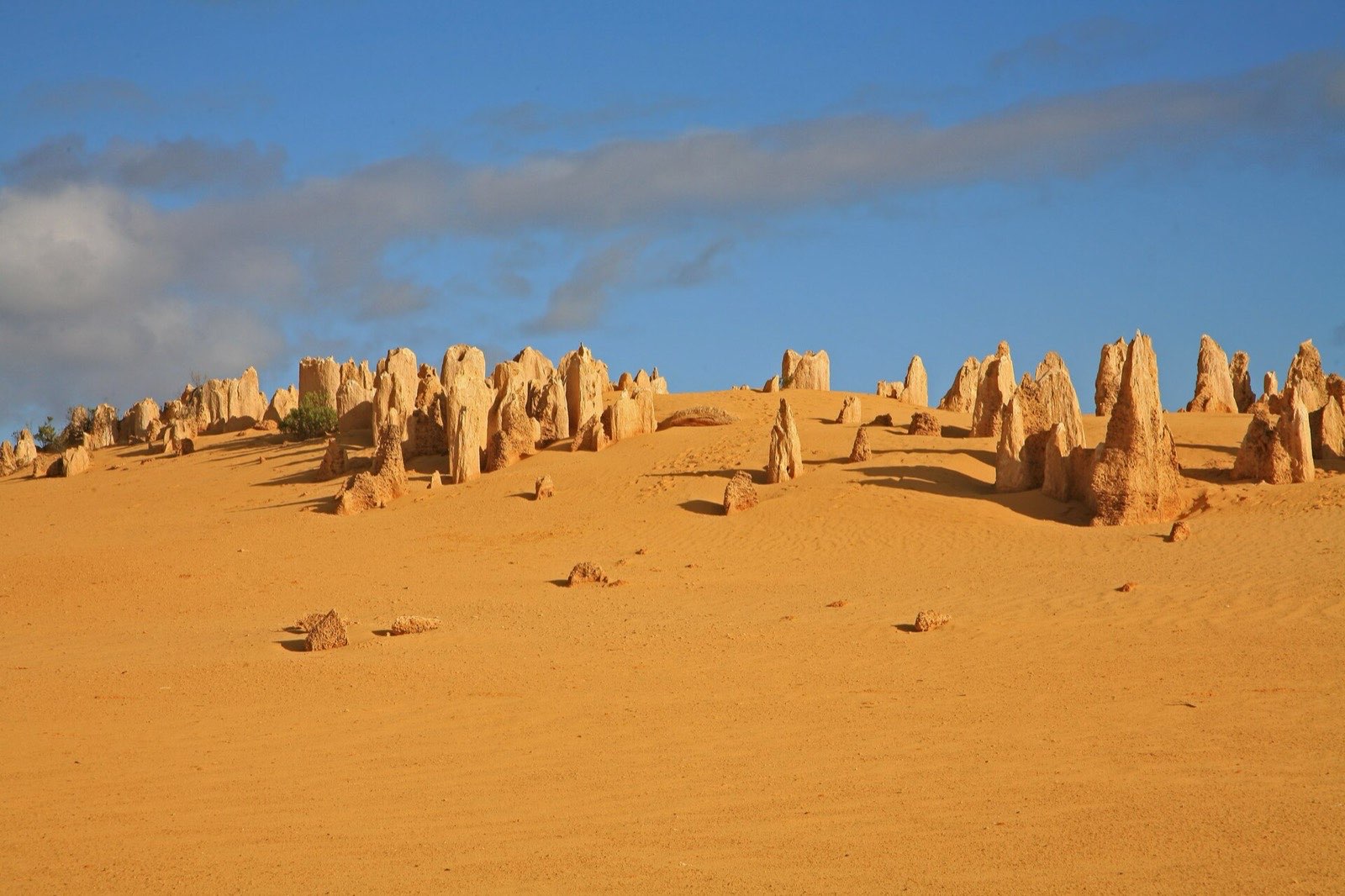
Pinnacle field and dune sand.

A landscape made of absence: the pinnacles are simply what the rain did not take.

Pinnacle field and dune sand.Photo · W. Bulach · CC BY-SA 4.0

The question

Why these spires survived

Dissolution followed the weaker, more porous paths through the limestone and left the tougher parts standing. Exactly why particular spires survived while their neighbours dissolved is still an open question for researchers.

Karst dissolution

Deep time

How long it took

  1. MIS 13–4

    Tamala Limestone

    Five members of dune limestone build up over successive Pleistocene cycles.

  2. ~102 ka

    The wet pulse

    An intensely wet period lasting several thousand years dissolves the pinnacle field.

  3. Since

    Wind

    Loose sand is blown away and the pillars emerge, then are re-buried and re-exposed.

  4. 2024

    Dated

    Lipar and Barham publish the U-Th/He age in Science Advances.

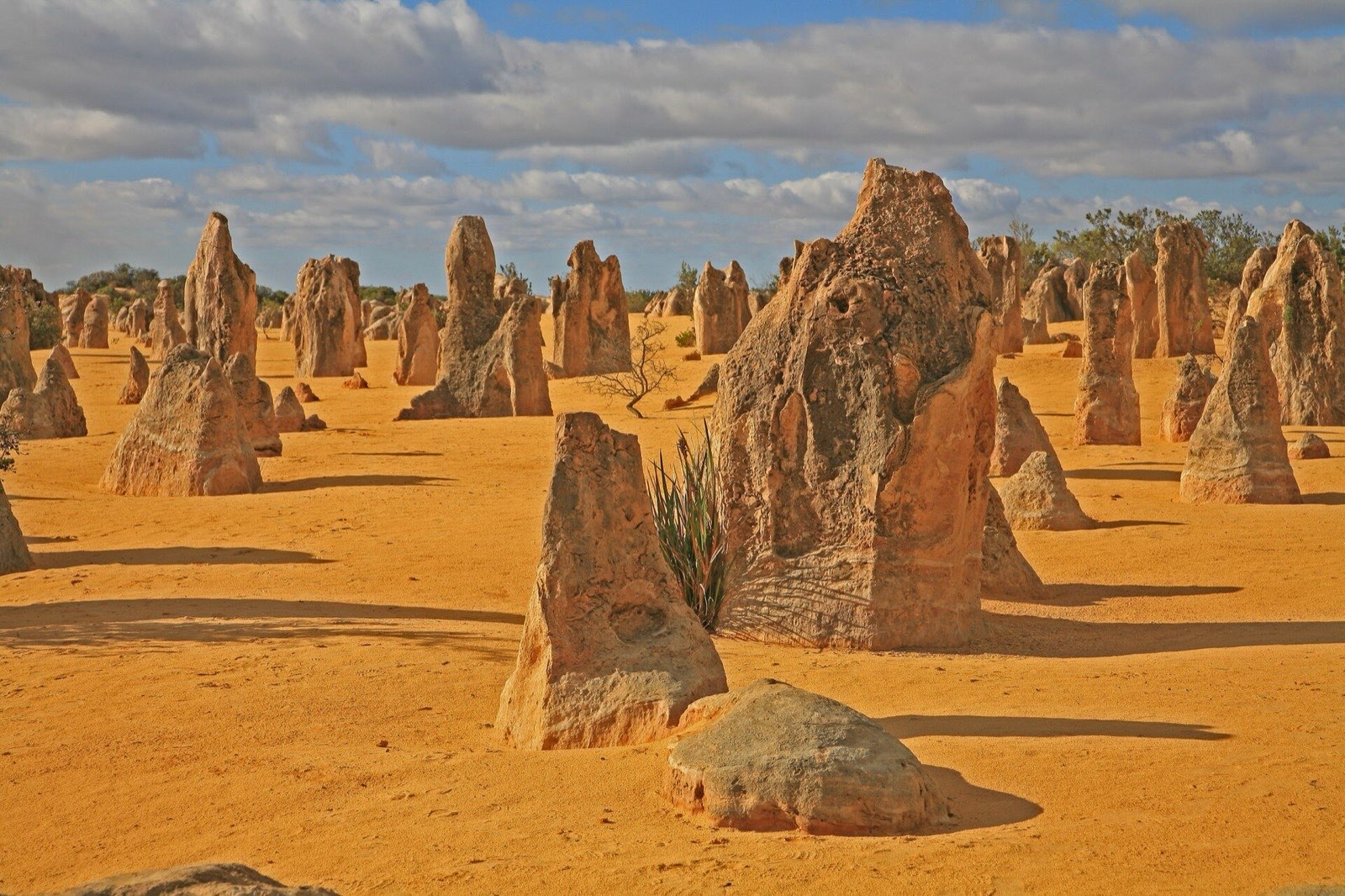
Detail of a pinnacle cluster.
Detail of a pinnacle cluster.Photo · W. Bulach · CC BY-SA 4.0

Field data

Rock
Aeolian calcarenite (Tamala Limestone)
Dating method
U-Th/He on goethite nodules
Age of formation
≈ 102,000 years
Pinnacle size
Up to 5 m high, 2 m wide
Published
Science Advances (2024)

IGMA simulation · move to heat

Rock Lab

Hold The Pinnacles in your hands

Turn a 3D model of The Pinnacles with hand gestures, heat its surface with your fingertip and weather it through 250,000 years.

Enter the Rock Lab

Next case · 05

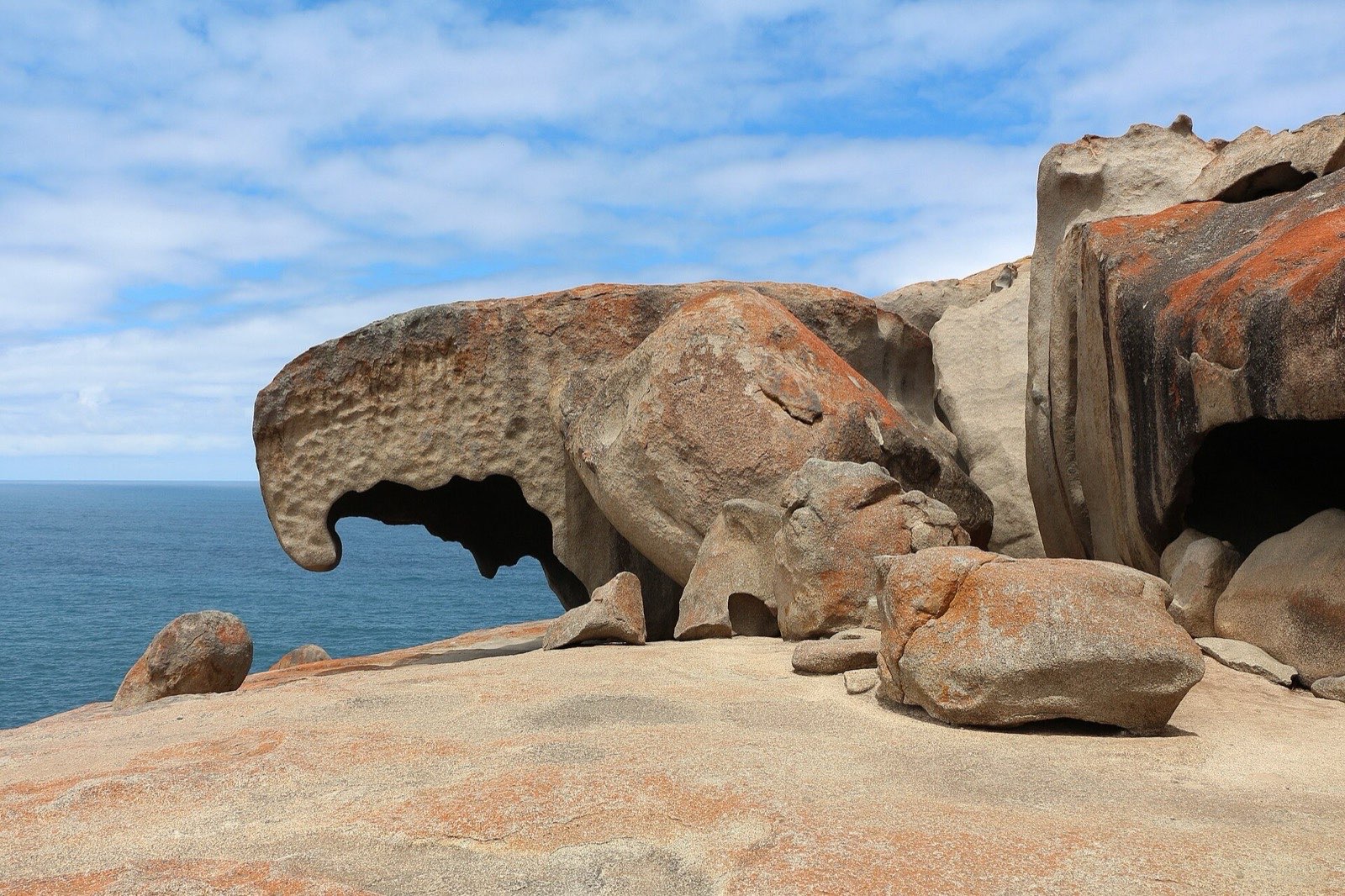
Granite hollowed by the Southern Ocean

Remarkable Rocks

Enter