Clock 01
The grain
Continuous and selective. Salt crystallises in the pores of the sandstone and prises grains apart, one by one. It deletes the soft matrix, leaves the iron ribs standing proud and hollows the face into honeycomb — tafoni.
Work 01 / Installation
Andy Nguyen · 2026
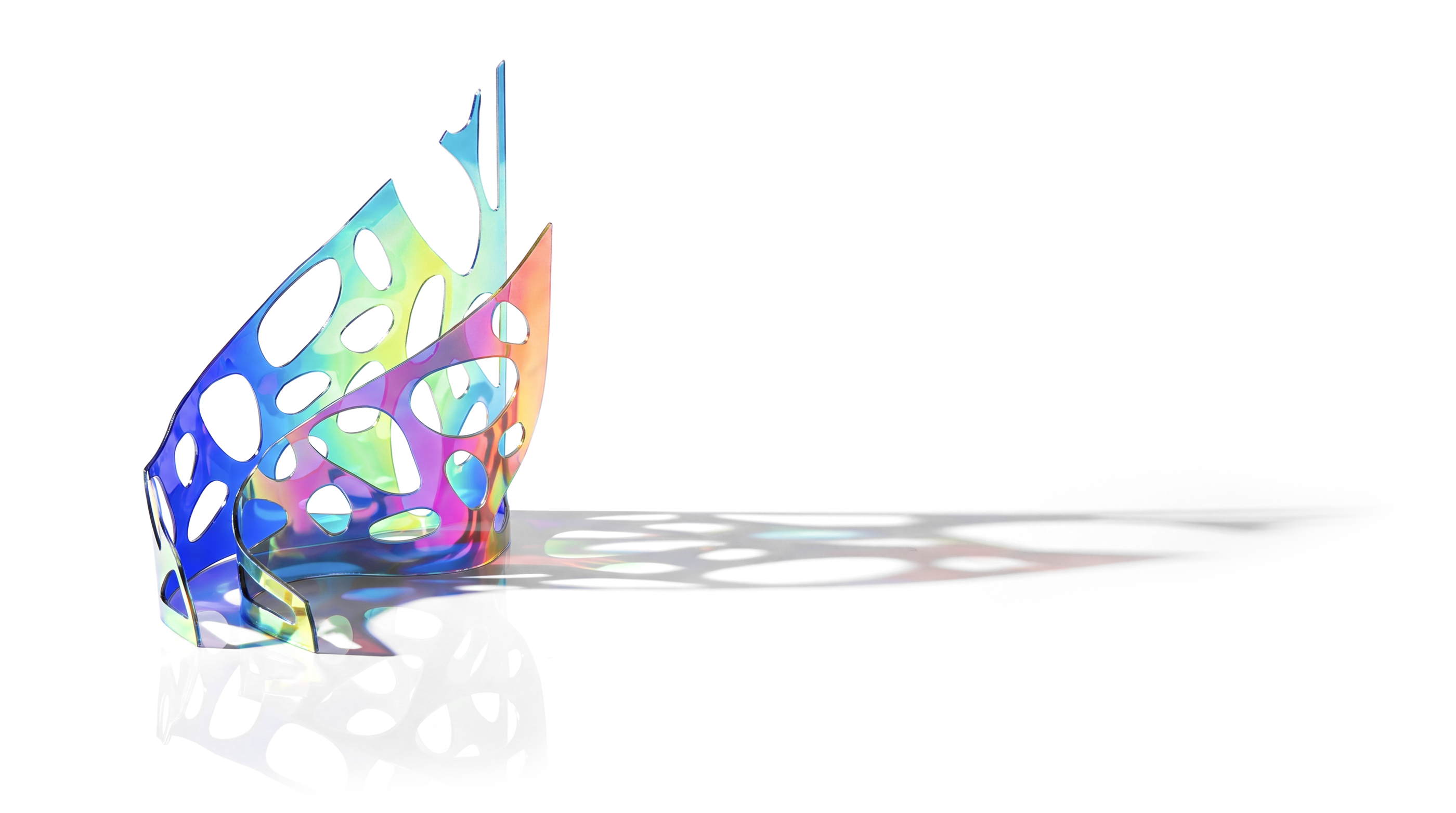
A shelter built the way the salt builds — hard skin, everything behind it removed.
Statement
The cliff has been making shelter for people all along — by destroying itself.
Tafoni is not a pattern. It is a structure. On the Hawkesbury Sandstone at Mackenzies Point, the surface case-hardens while the material behind it weakens and leaves — a stiff crust over a hollow core, load carried in the skin. That is a shell.
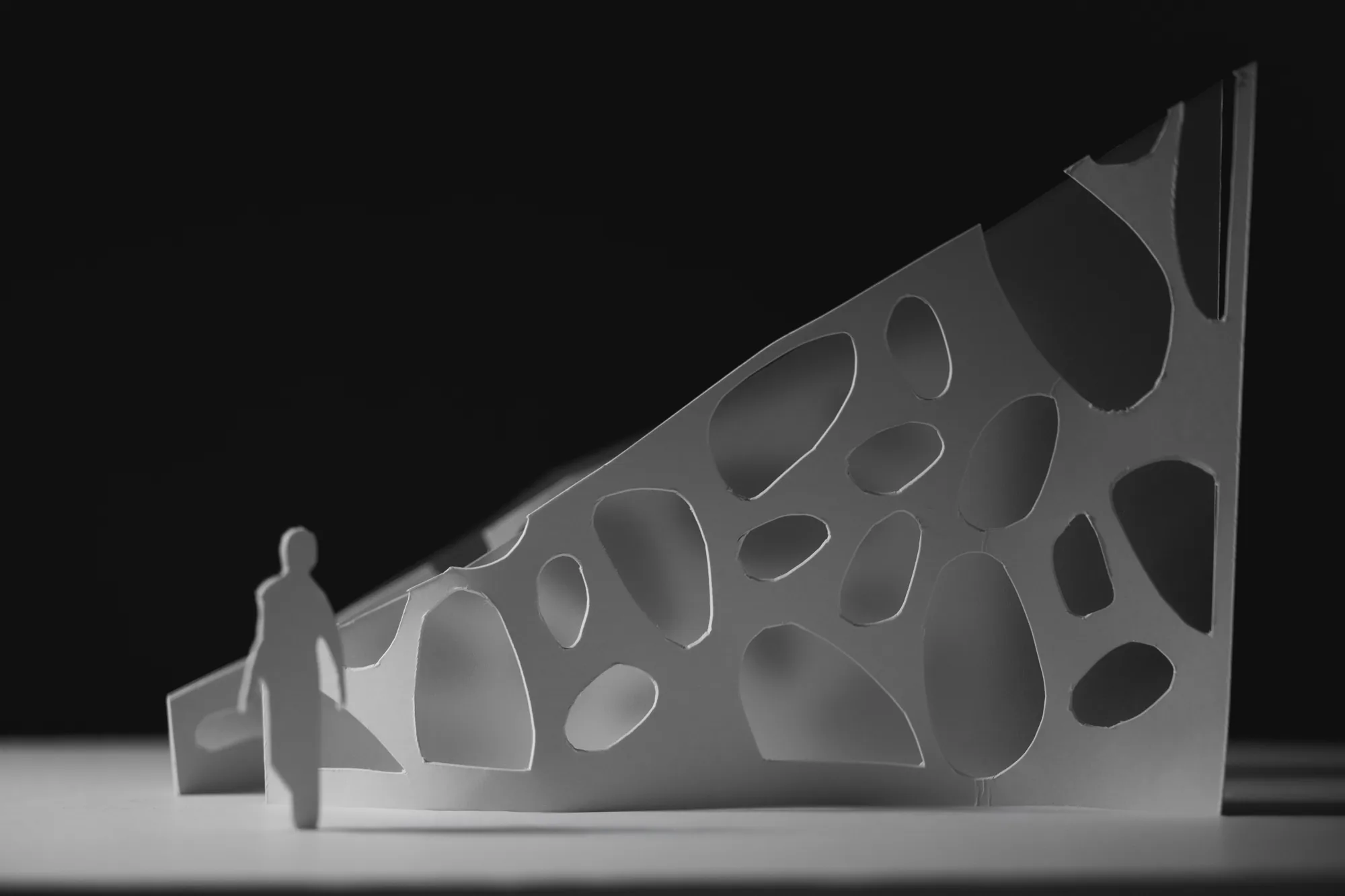
The Grain Clock repeats the process that made every cavity here. One continuous curved surface, thin, standing over the crowd on the crest. It shelters by what has been taken away from it: I am doing deliberately what salt has done here for millions of years.
The mechanism
The site
A Hawkesbury Sandstone sea cliff between Bondi and Tamarama, on Bidjigal, Birrabirragal and Gadigal Country. The sand is not from here: a braided river on the scale of the Brahmaputra carried it 1,500–2,000 km, likely from East Antarctica, 247–242 million years ago. Cross-bedding still records the current.
East-facing, morning sun only, constant salt wind. Four bands of life are sorted by exposure — Themeda grassland on the crest, lichen on the face, algal skin in the splash zone, cunjevoi at the tide line. The same stone was quarried to build heritage Sydney: cliff and city, one material in two states.
Theme
Clock 01
Continuous and selective. Salt crystallises in the pores of the sandstone and prises grains apart, one by one. It deletes the soft matrix, leaves the iron ribs standing proud and hollows the face into honeycomb — tafoni.
Clock 02
Silent for years, then total. The cliff fractures cleanly along its joints and a whole slab leaves at once. The trigger is rain, not waves — proved here in April 2024, when a slip below Marks Park took the walkway.
Nothing built here has a stable datum and no footing stays put. That is the design condition: the work sides with the grain clock — light, thin, resting on the platform — and leaves the block clock alone.
Details

Process
Mapped the cliff face, cavity fields, iron ribs, the wave-cut notch and the April 2024 slip scar. Four bands of life sorted by exposure, crest to tide line.
Two Clocks: a cliff erased at two speeds. Anything built here has to declare which clock it is on.
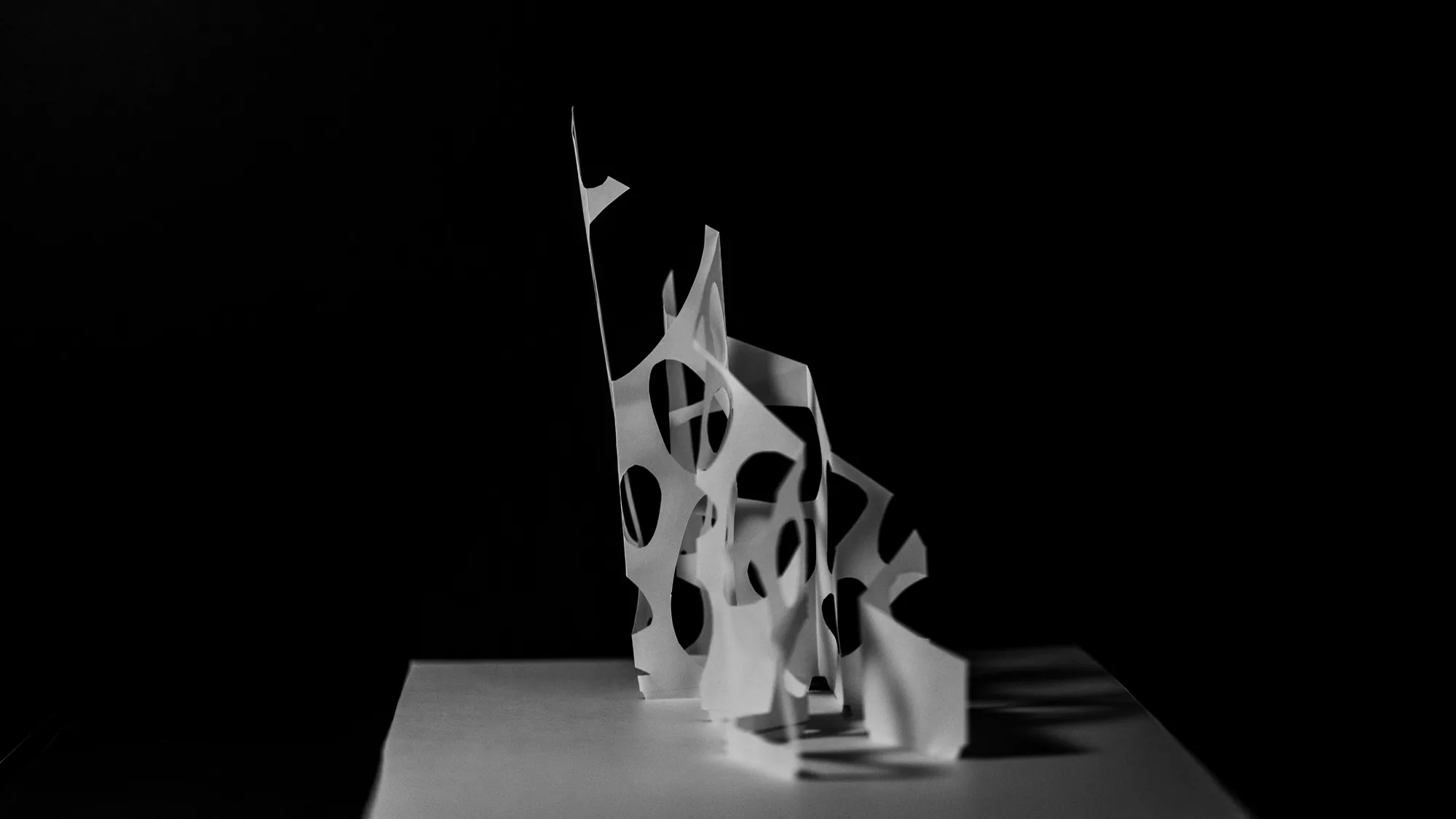
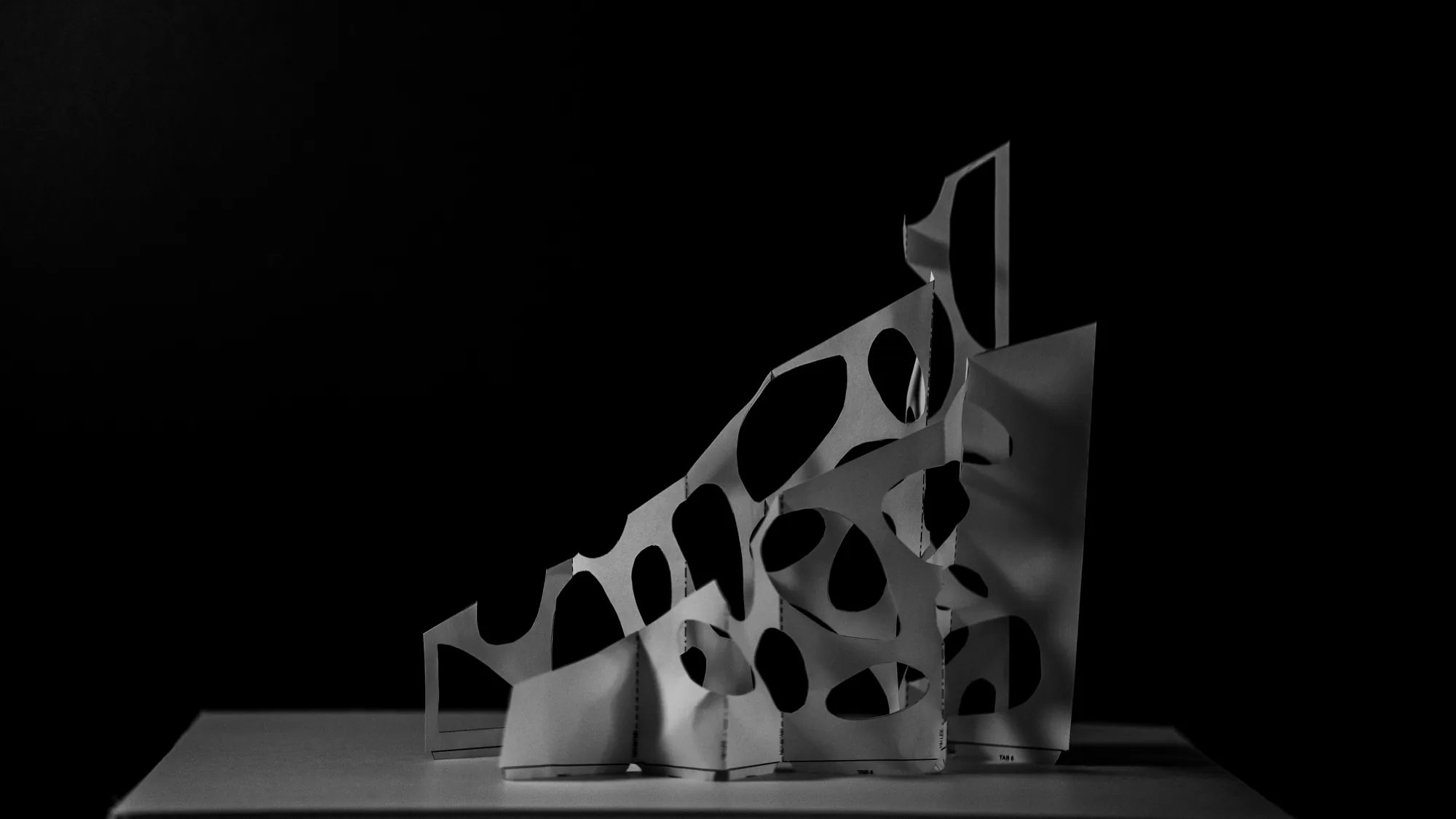
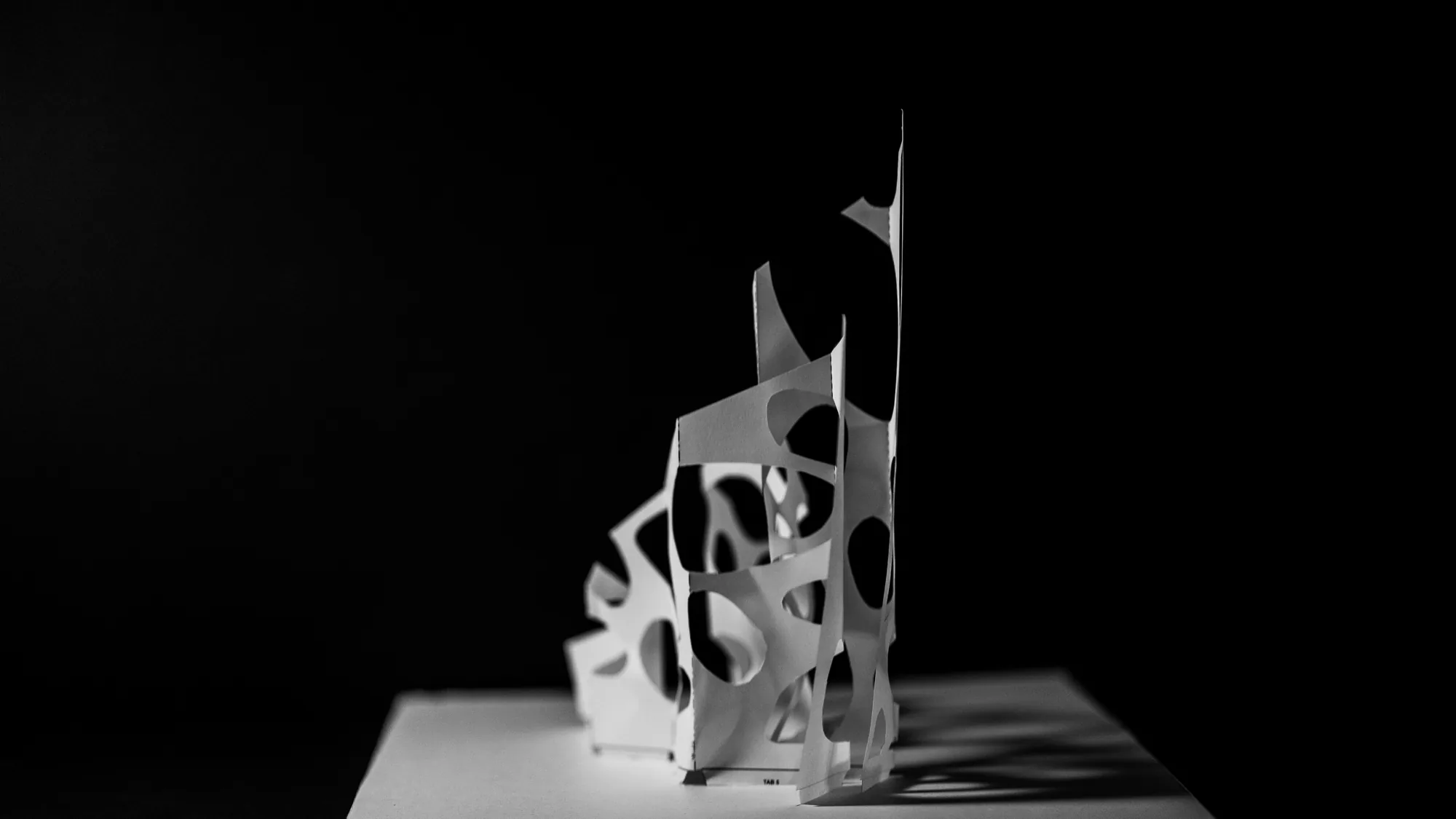
A shell built the way the grain clock builds — a hard skin with everything behind it removed. Case hardening as structure.
One continuous curved surface, thin, standing like a breaking wave. Openings graded: closed where the wind hits hardest, open where the cliff shelters it.
Concept
Direction A
DevelopedA hard skin with everything behind it removed. One continuous thin surface over the crowd on the crest; openings closed to the wind and open where the cliff shelters.
Direction B
HeldOne element crossing all four bands of life, changing enclosure as it descends, so people sort themselves by tolerance the way lichen and cunjevoi do.
Form development, in plan
Studio process
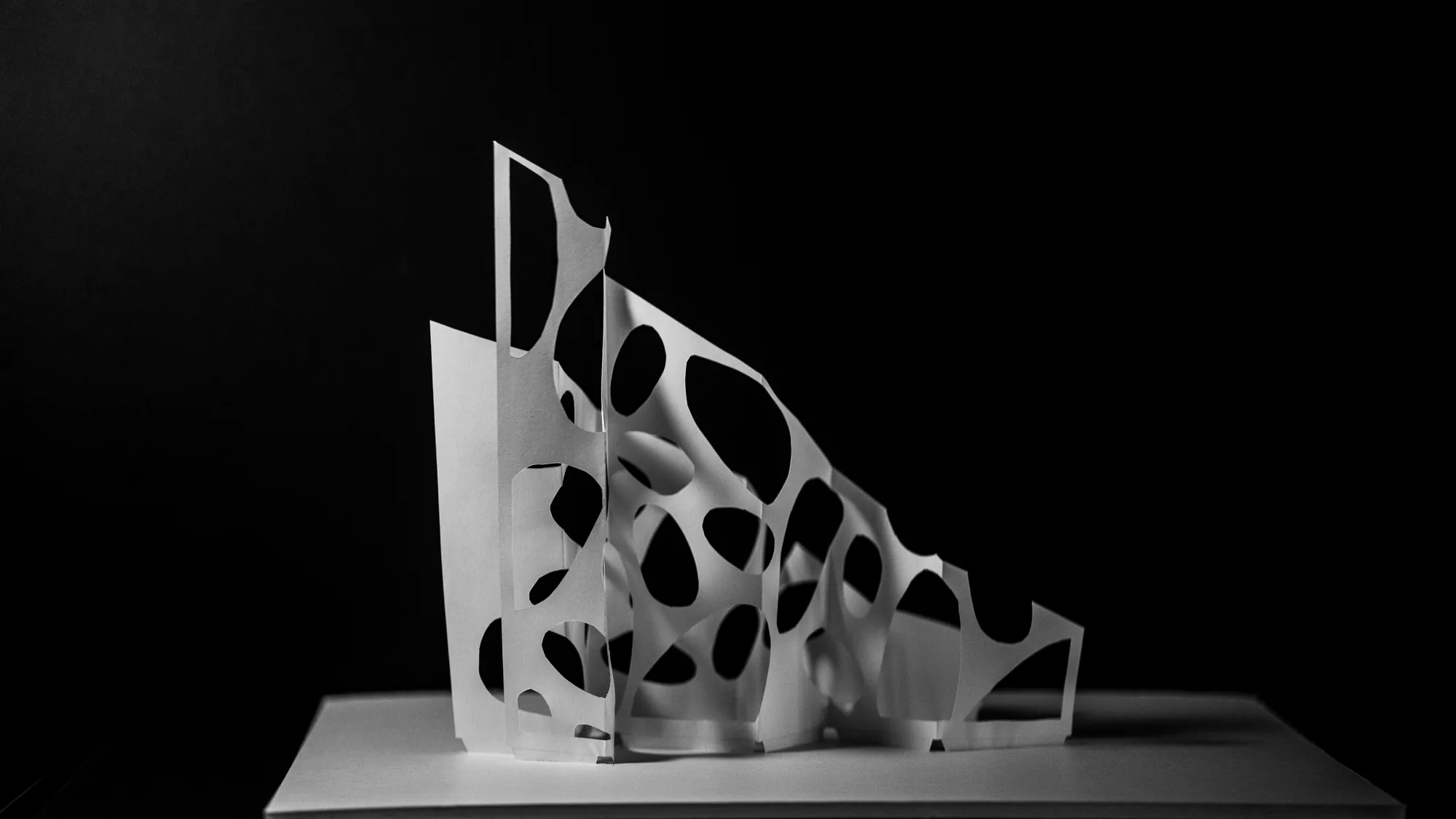
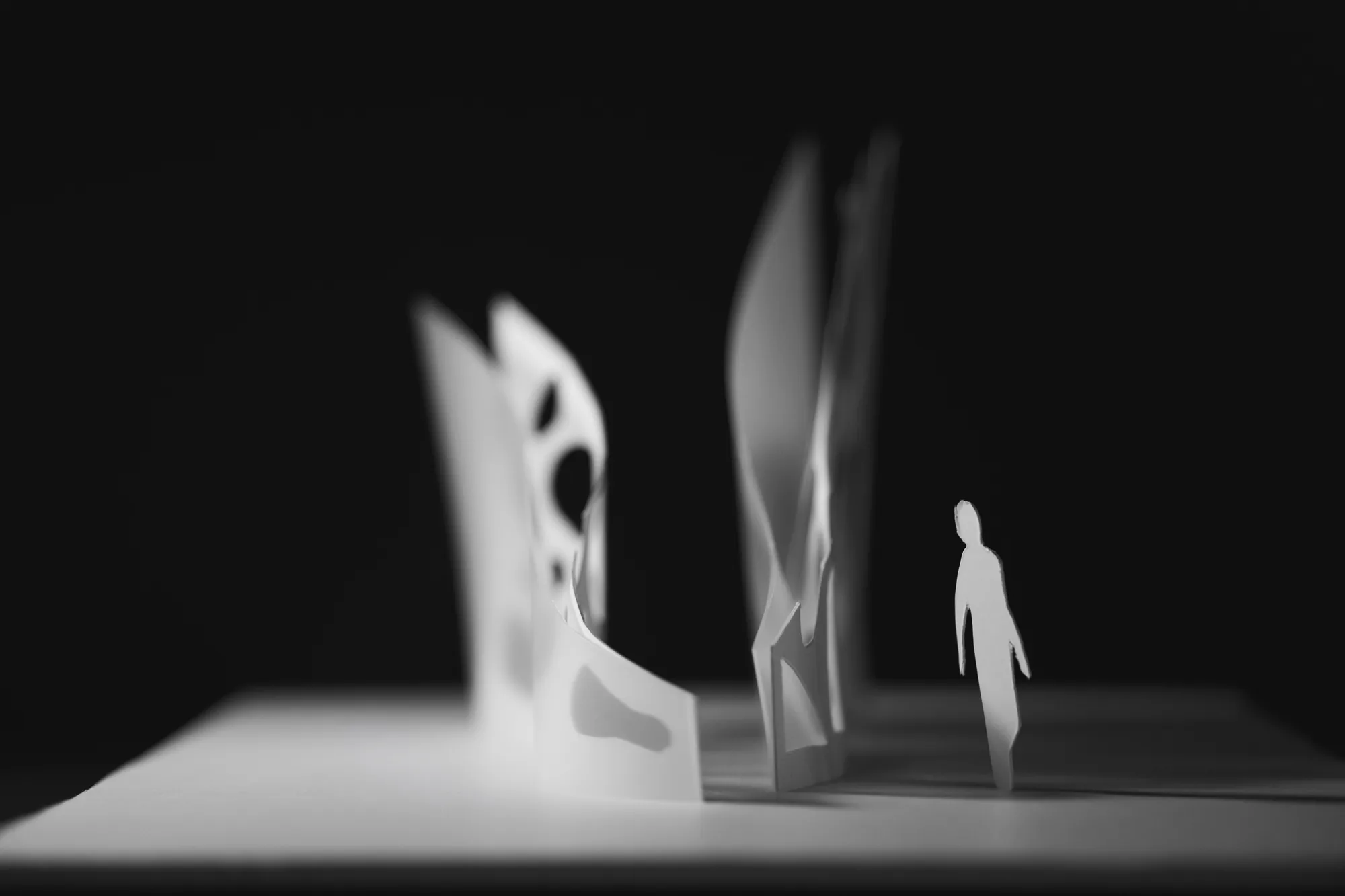
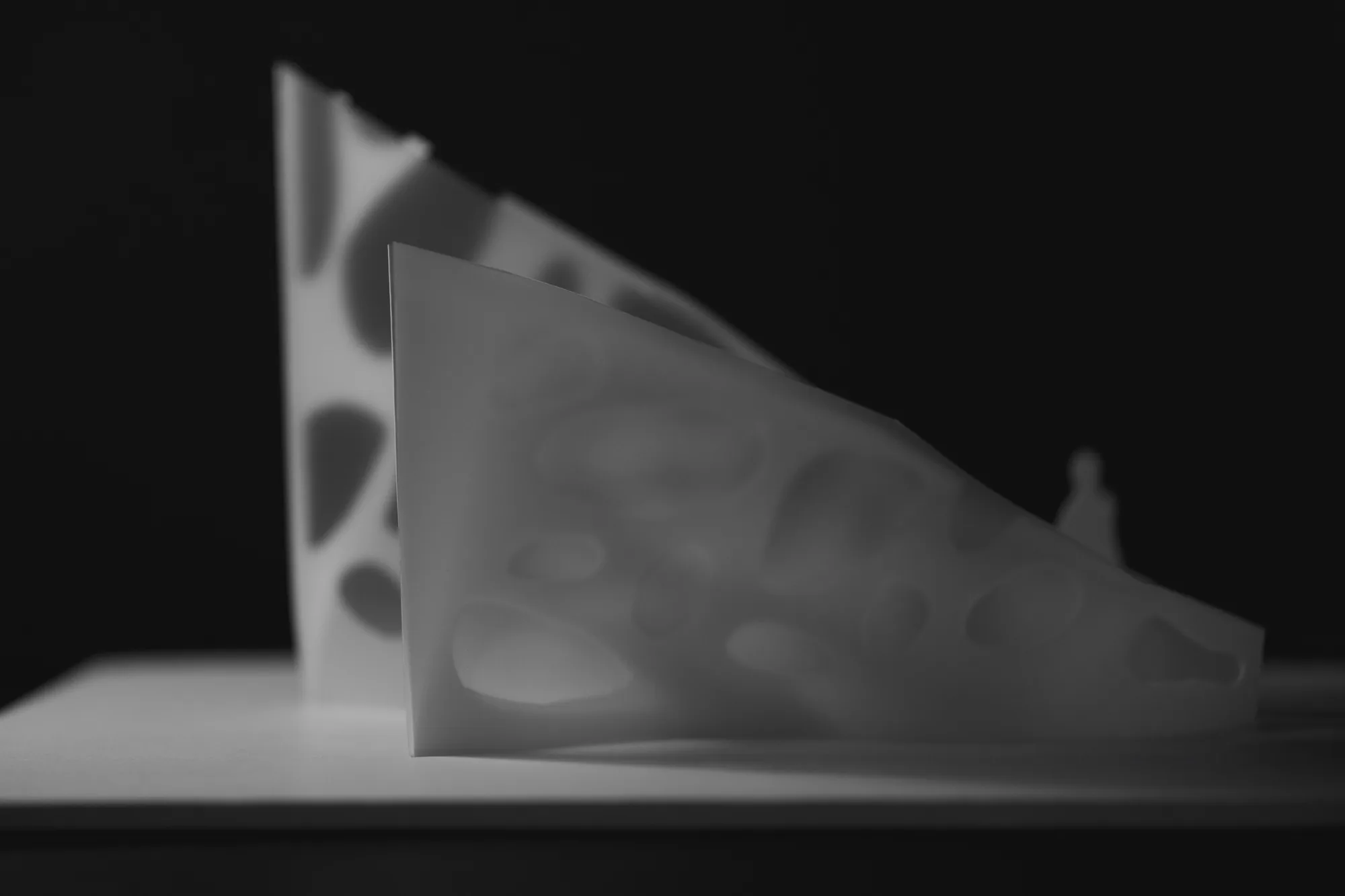
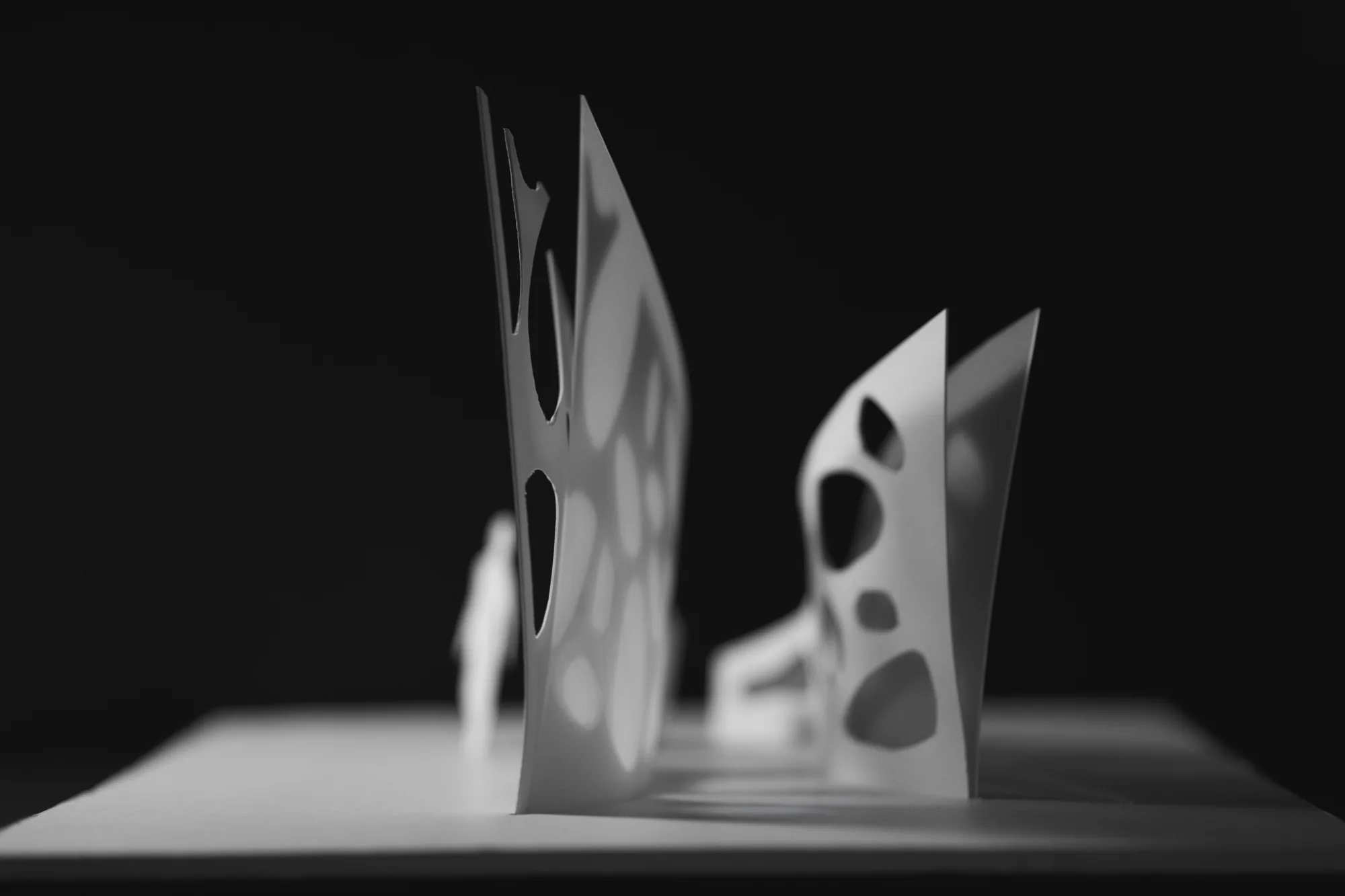
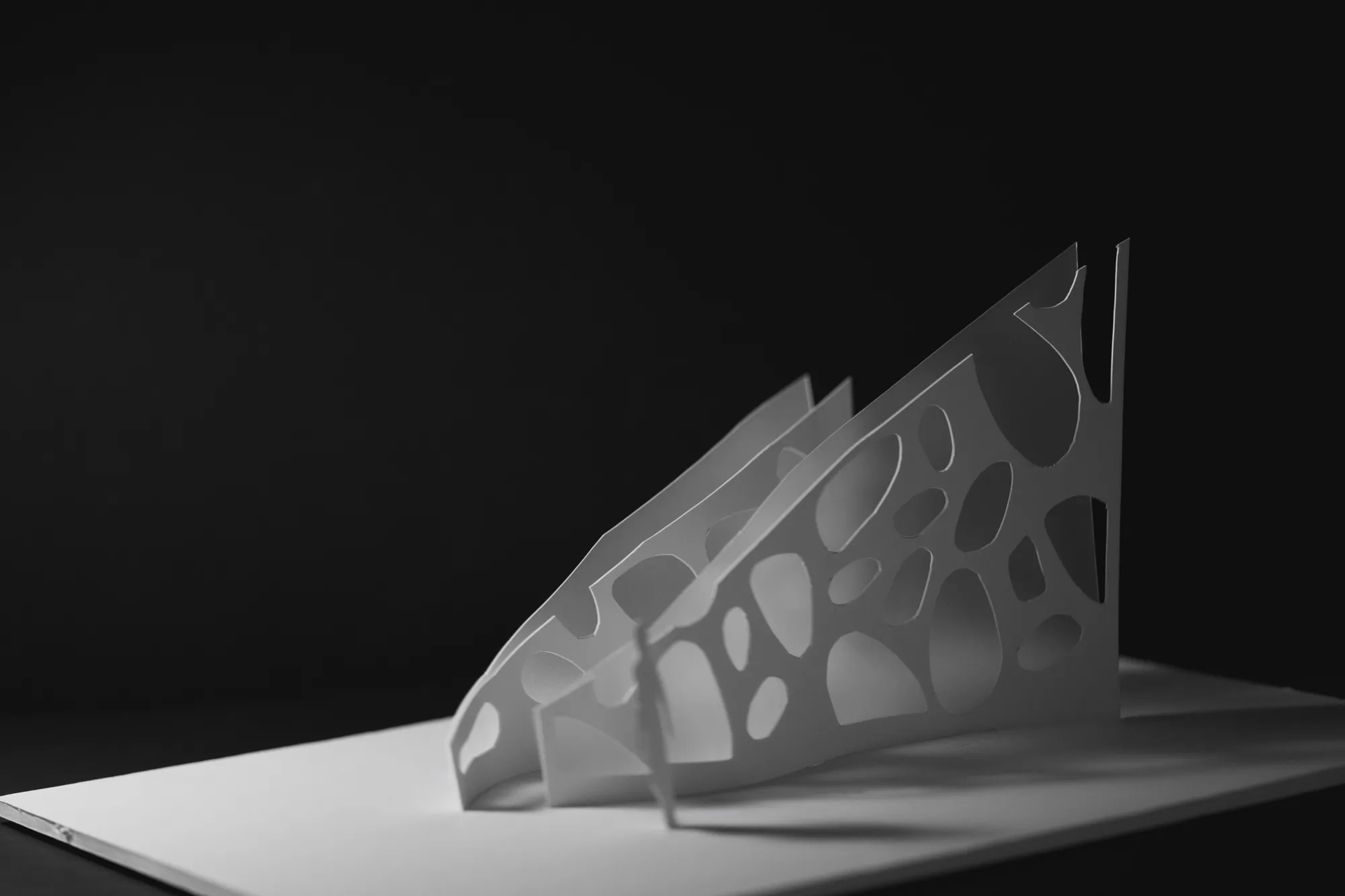
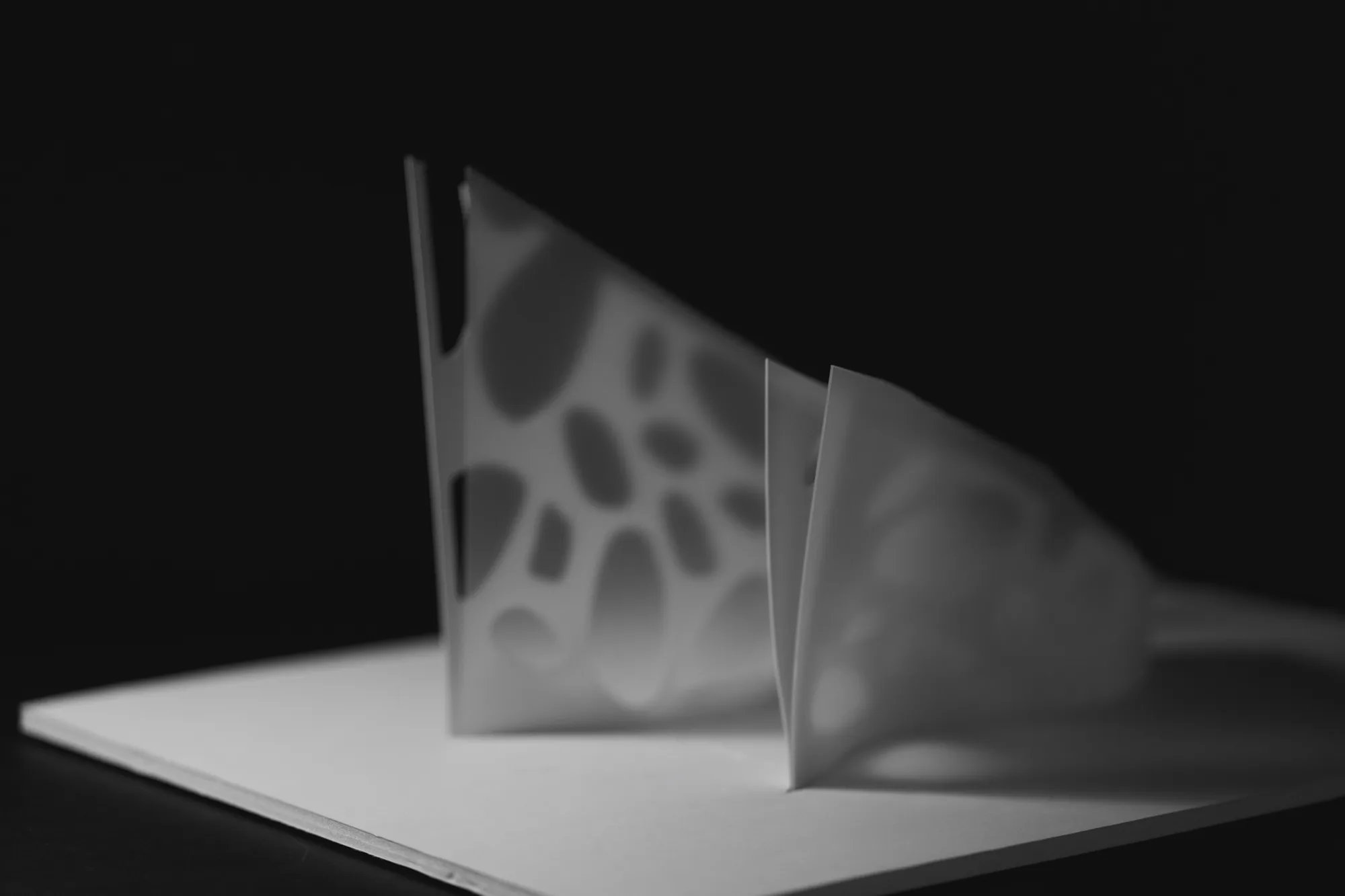
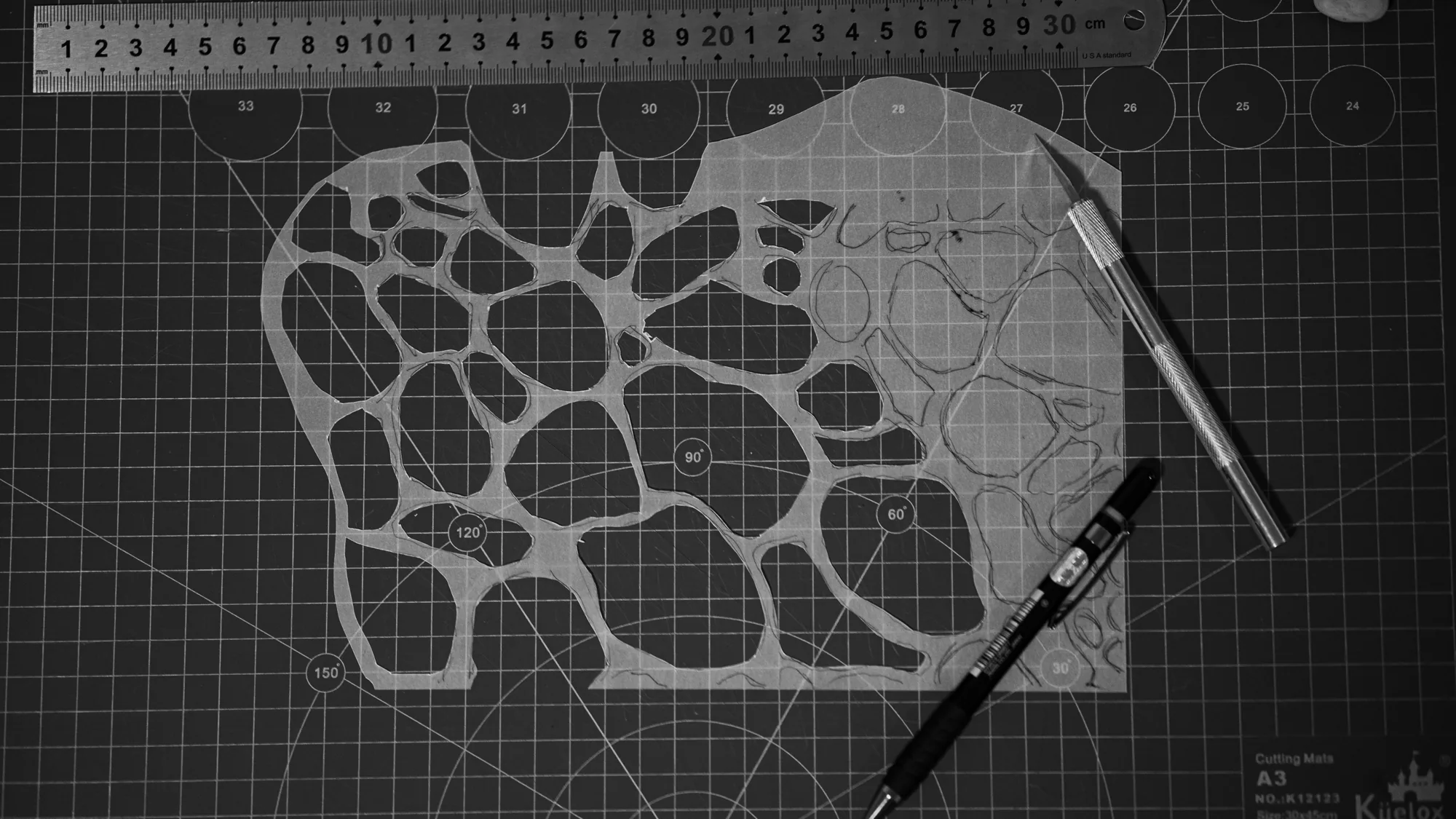
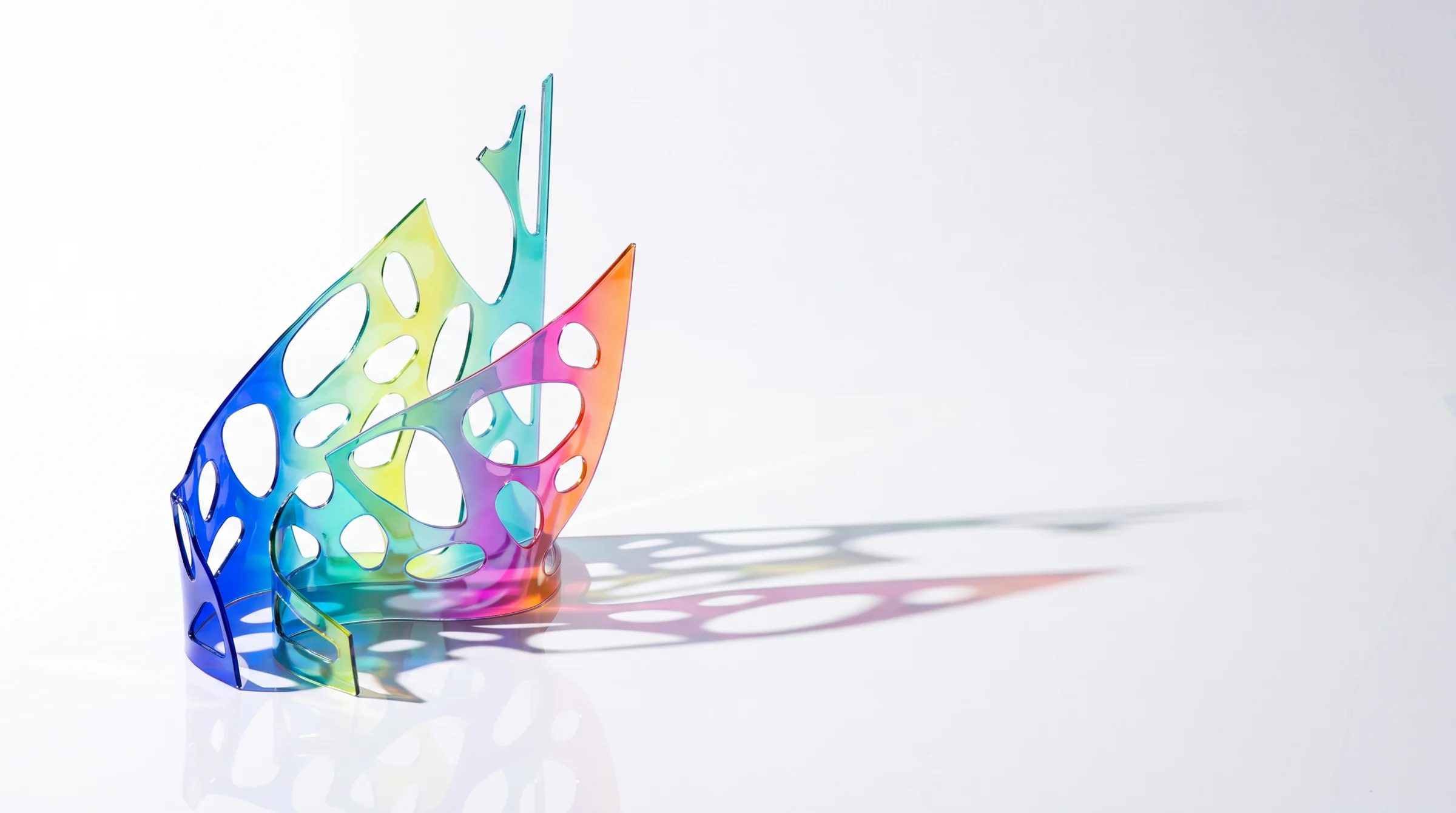
Before any render, the shell was found in paper. Each study is one sheet, cut with a scalpel and curved until it stands on its own — if it needs a prop, the openings are wrong. Scale figures test where people stop, sit and lean.
Views
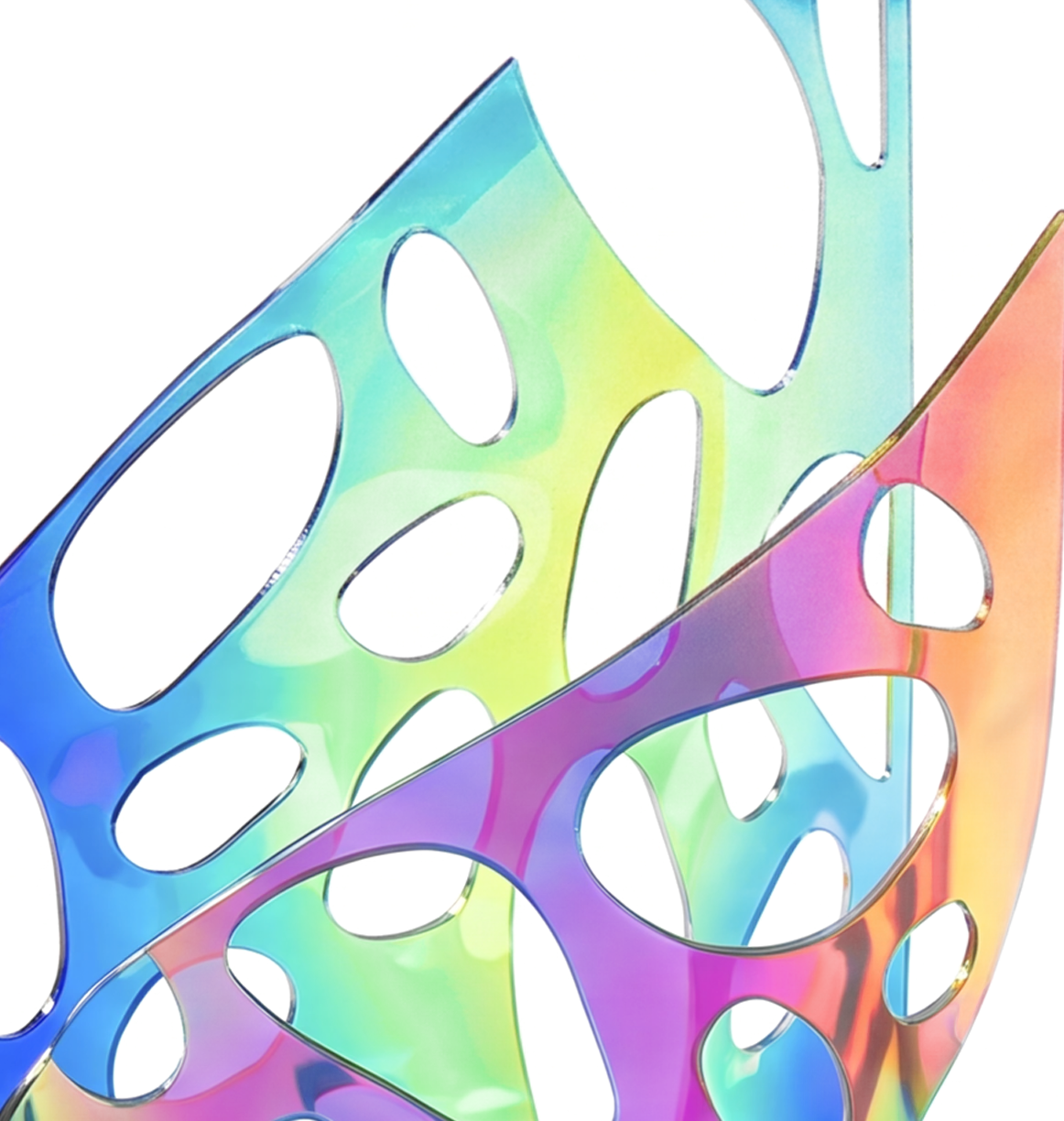
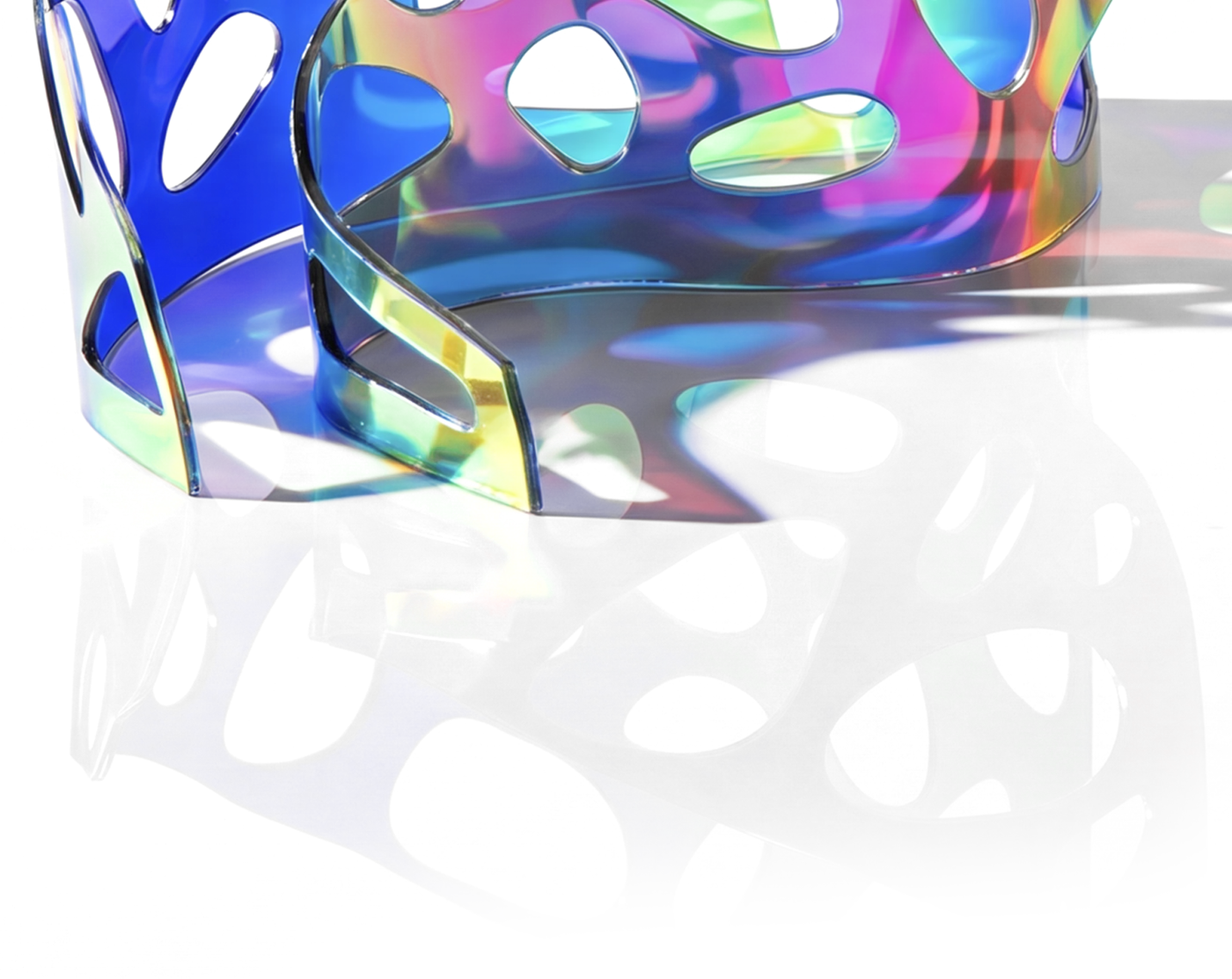
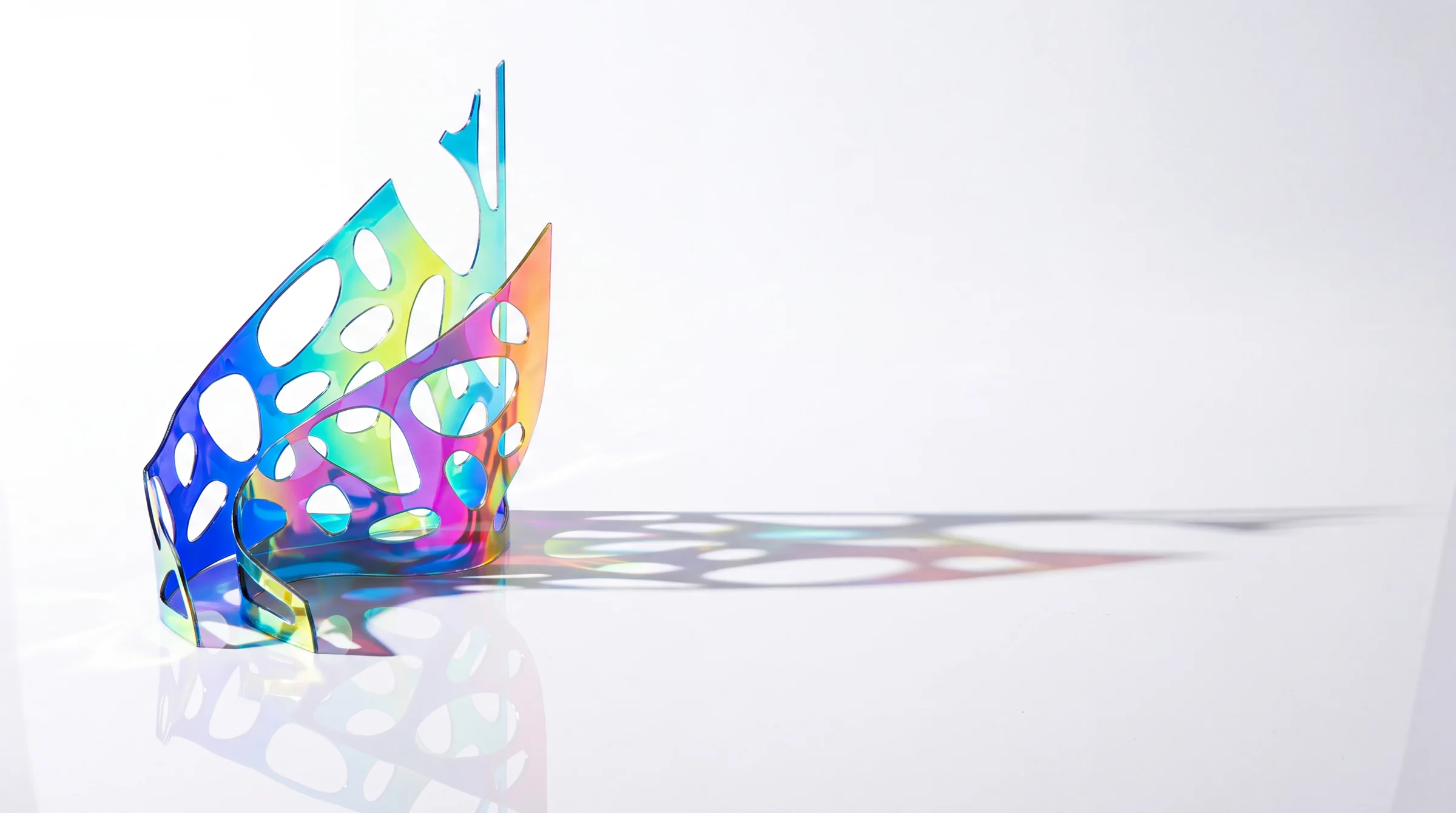
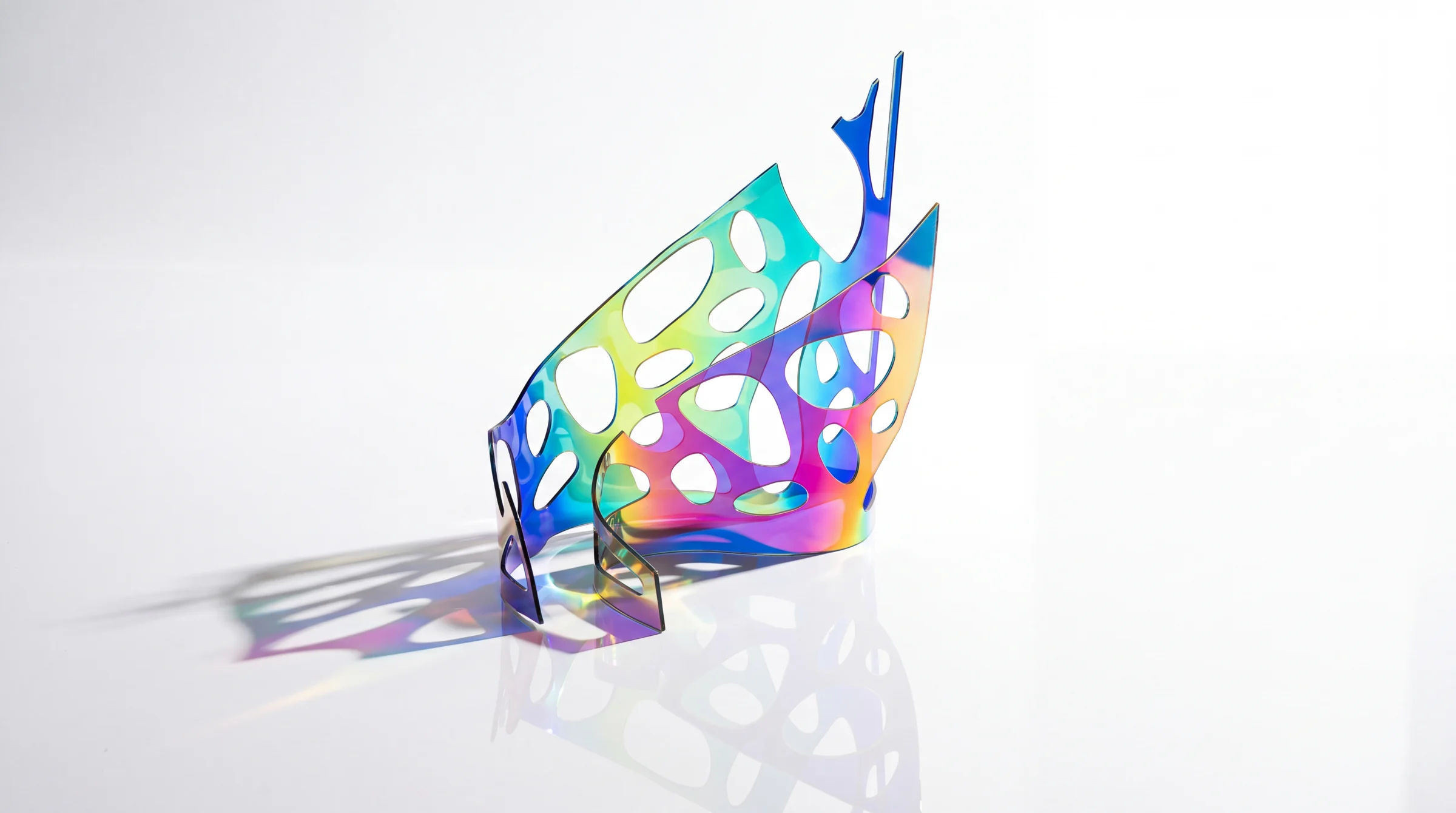
Colour is a function of angle. Walk around the piece and the sheet runs from Klein blue through citric to tangerine — the orange-and-black of the iron bands, turned to light.
Research
IGMA acknowledges the Bidjigal, Birrabirragal and Gadigal peoples, Traditional Custodians of the land and sea where this work is proposed, and pays respect to Elders past and present.
More research →