Chapter 01
A plateau of sand
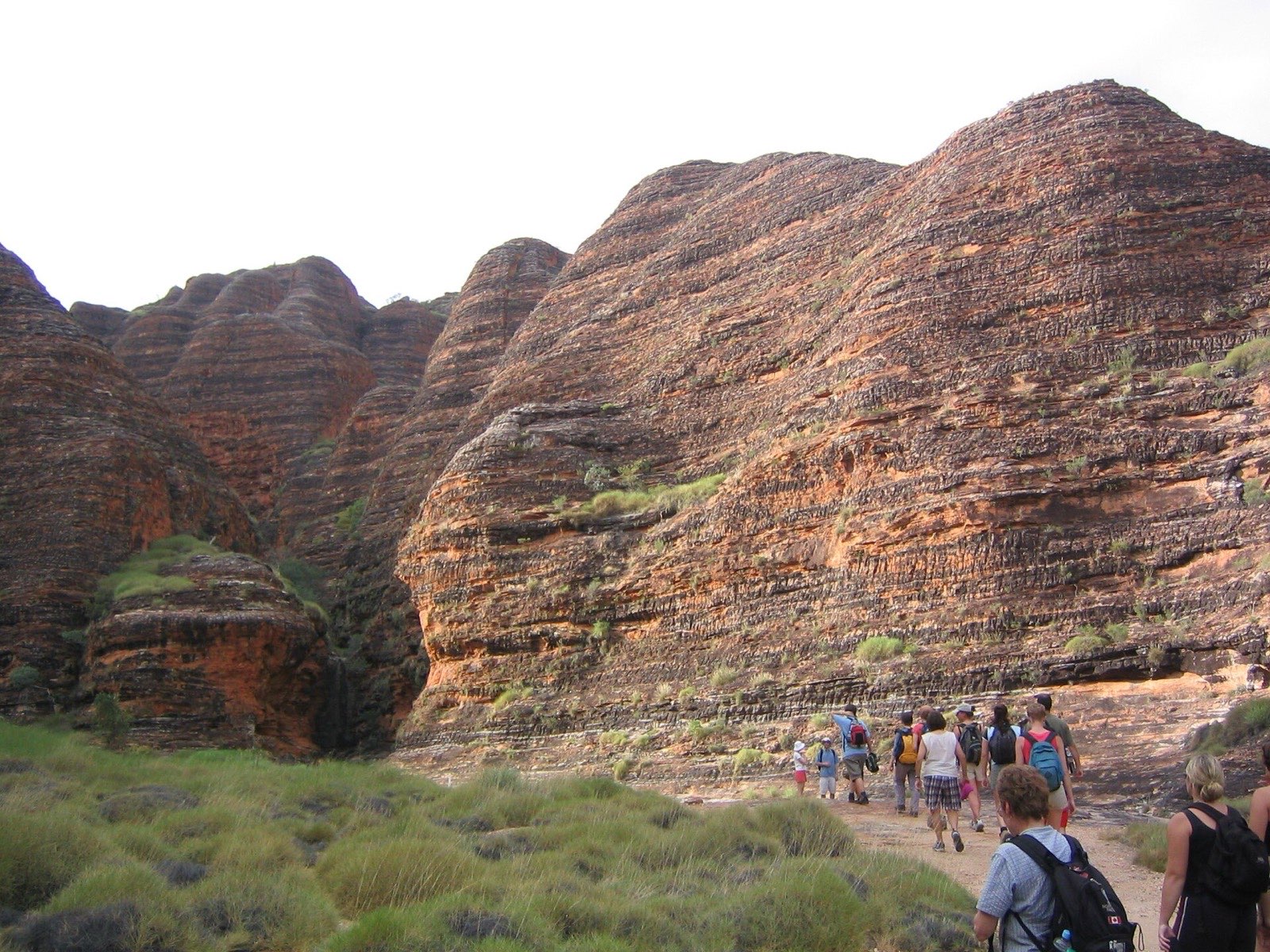
The range began as a Devonian sandstone plateau. Over some 20 million years, wind, rain and sheet wash on the slopes removed sand grain by grain and cut the plateau into domes.
Location
Purnululu National Park, WA
Rock
Devonian sandstone
Age
Devonian · eroded over ~20 Myr
Process
Cone karst in sandstone
Status
UNESCO World Heritage (2003)
Overview
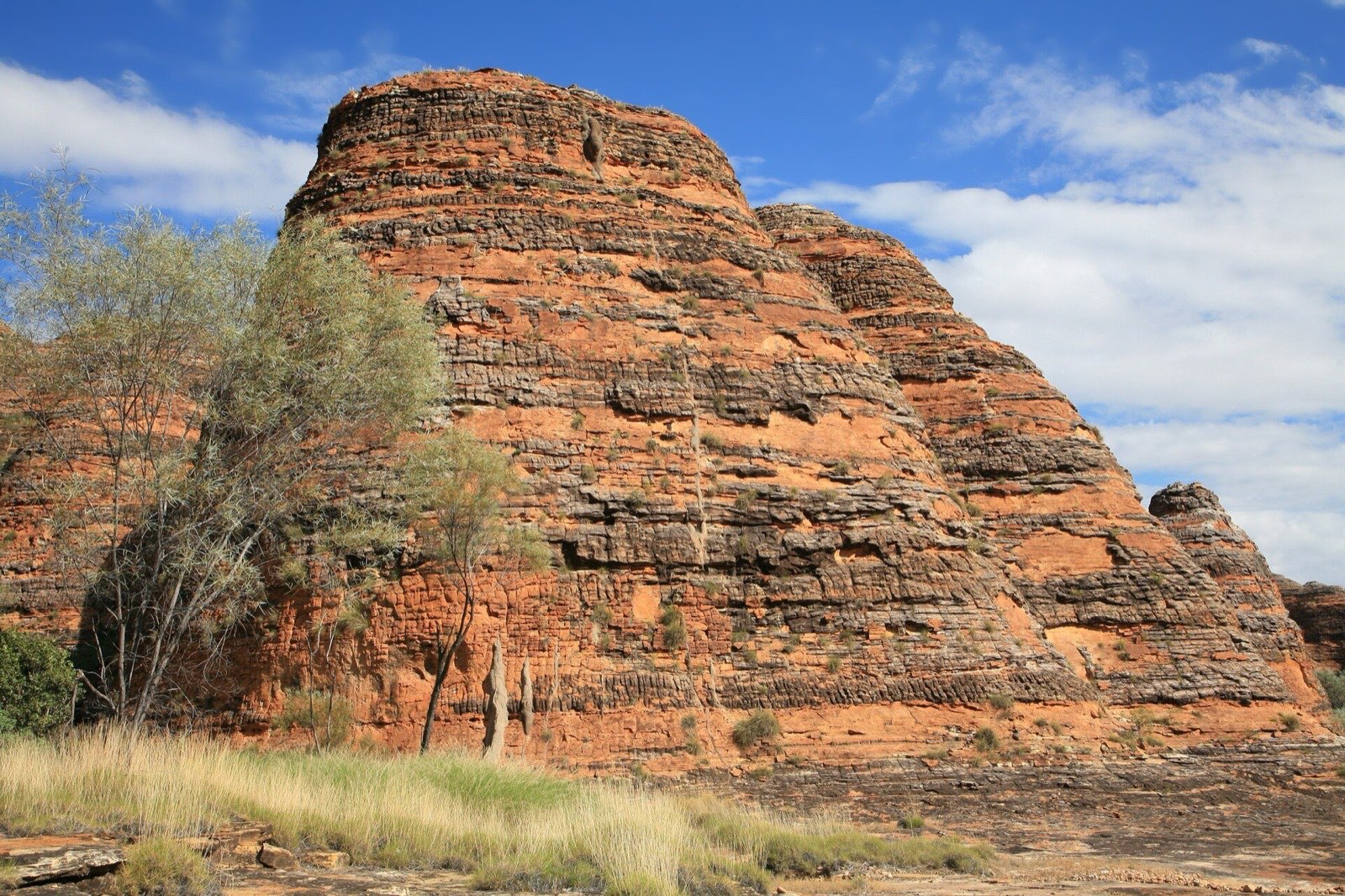
In the east Kimberley, hundreds of striped sandstone domes rise up to 250 metres from the savannah. Their bands of orange and grey are made by rust and by living cyanobacteria.
250m
Height of the domes above the plain
~20Myr
Of erosion shaping the range
2003
Inscribed as World Heritage
Chapter 01
The range began as a Devonian sandstone plateau. Over some 20 million years, wind, rain and sheet wash on the slopes removed sand grain by grain and cut the plateau into domes.
Chapter 02
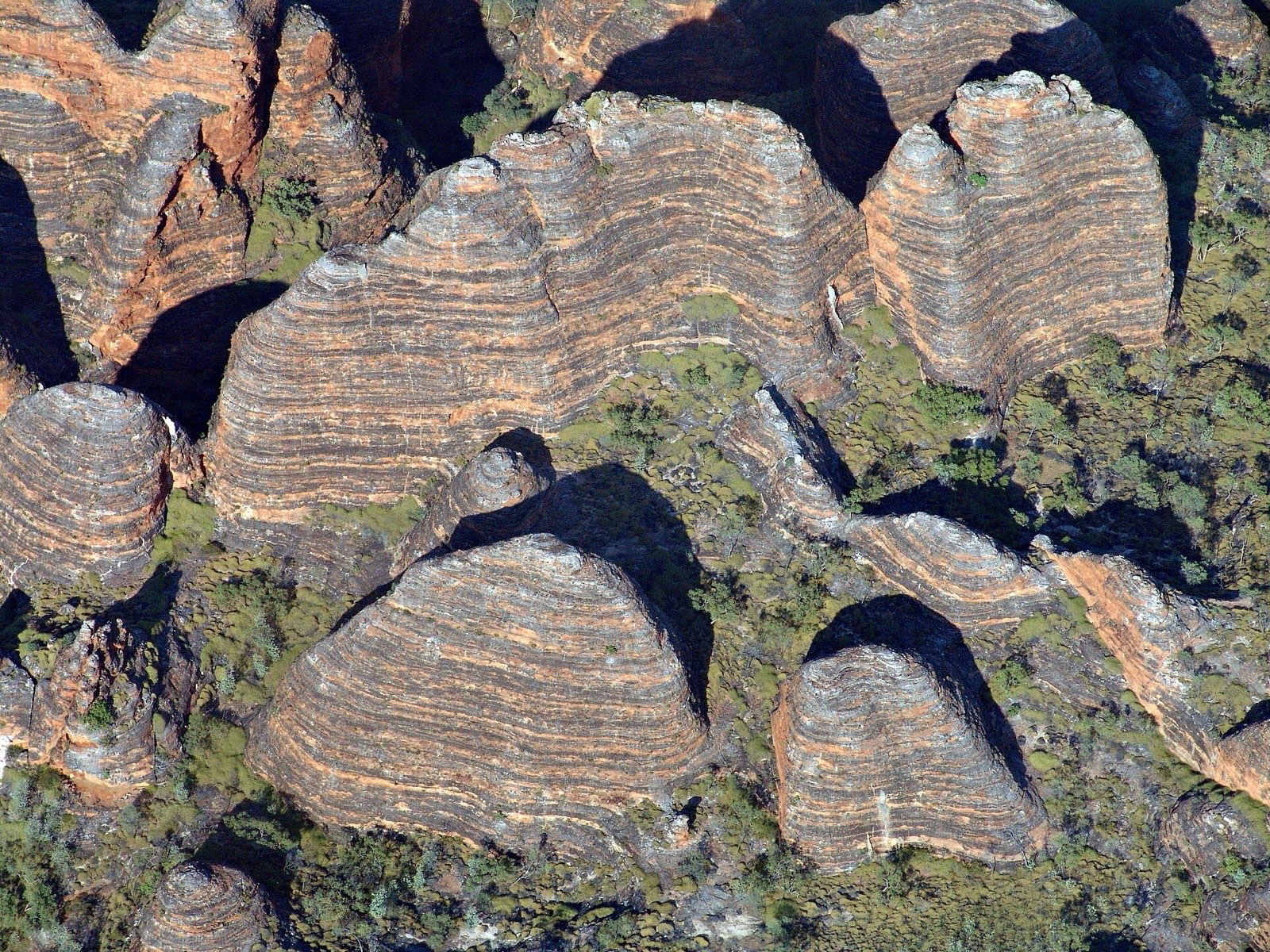
The sandstone alternates between layers that hold moisture and layers that dry out quickly. That difference, a few centimetres thick, decides the colour of every stripe.
Chapter 03
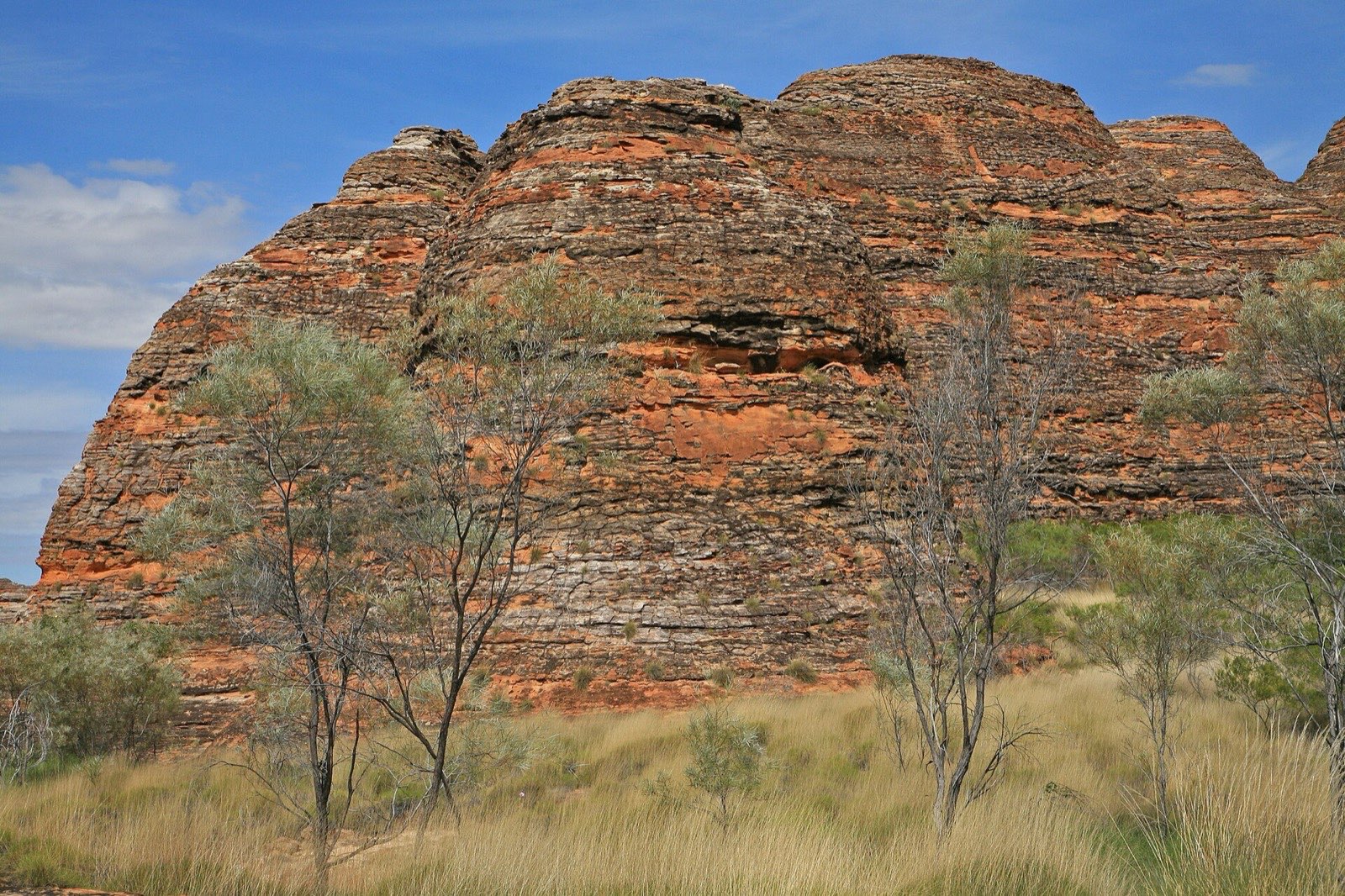
Fast-drying layers carry oxidised iron and glow orange. Moisture-holding layers host dark colonies of cyanobacteria, which paint the grey bands and help armour the domes against erosion.
Chapter 04
The dark bands are not just colour. The cyanobacteria form a crust that holds the sand grains together, helping protect the soft sandstone beneath from erosion.
Chapter 05
How exactly the domes formed is not fully understood. They are described as sandstone cone karst: a landscape shaped by dissolution and the removal of loose grains rather than by rivers cutting canyons alone.
How it forms
A plateau of Devonian sandstone, layered by the rivers that deposited it.
Rain, wind and sheet wash cut channels into the plateau, isolating blocks.
Grains are removed from the slopes and the blocks round into beehive domes.
Iron oxide bands and cyanobacteria bands colour alternate layers orange and grey.
Every stripe is a record of water: where it lingered, life moved in; where it left, the rock rusted.
The question
Alternating layers of the sandstone differ in how much water they hold. Wet layers grow dark cyanobacteria; dry layers oxidise to rust orange. The rock records its own moisture in colour.
Cone karst in sandstone
Deep time
Devonian
Sand
Rivers lay down thick sands that harden into sandstone.
~20 Myr
Erosion
The plateau is dissected and rounded into hundreds of domes.
2003
World Heritage
Purnululu National Park is inscribed on the UNESCO World Heritage List.
2022
Recognition
The Federal Court recognises Purnululu and Gajangana Jaru as traditional owners.
Field record
Field data
IGMA simulation · move to heat
Rock Lab
Turn a 3D model of Bungle Bungle with hand gestures, heat its surface with your fingertip and weather it through 250,000 years.
Enter the Rock LabPhotography
Next case · 09
Lava that cracked into hexagons