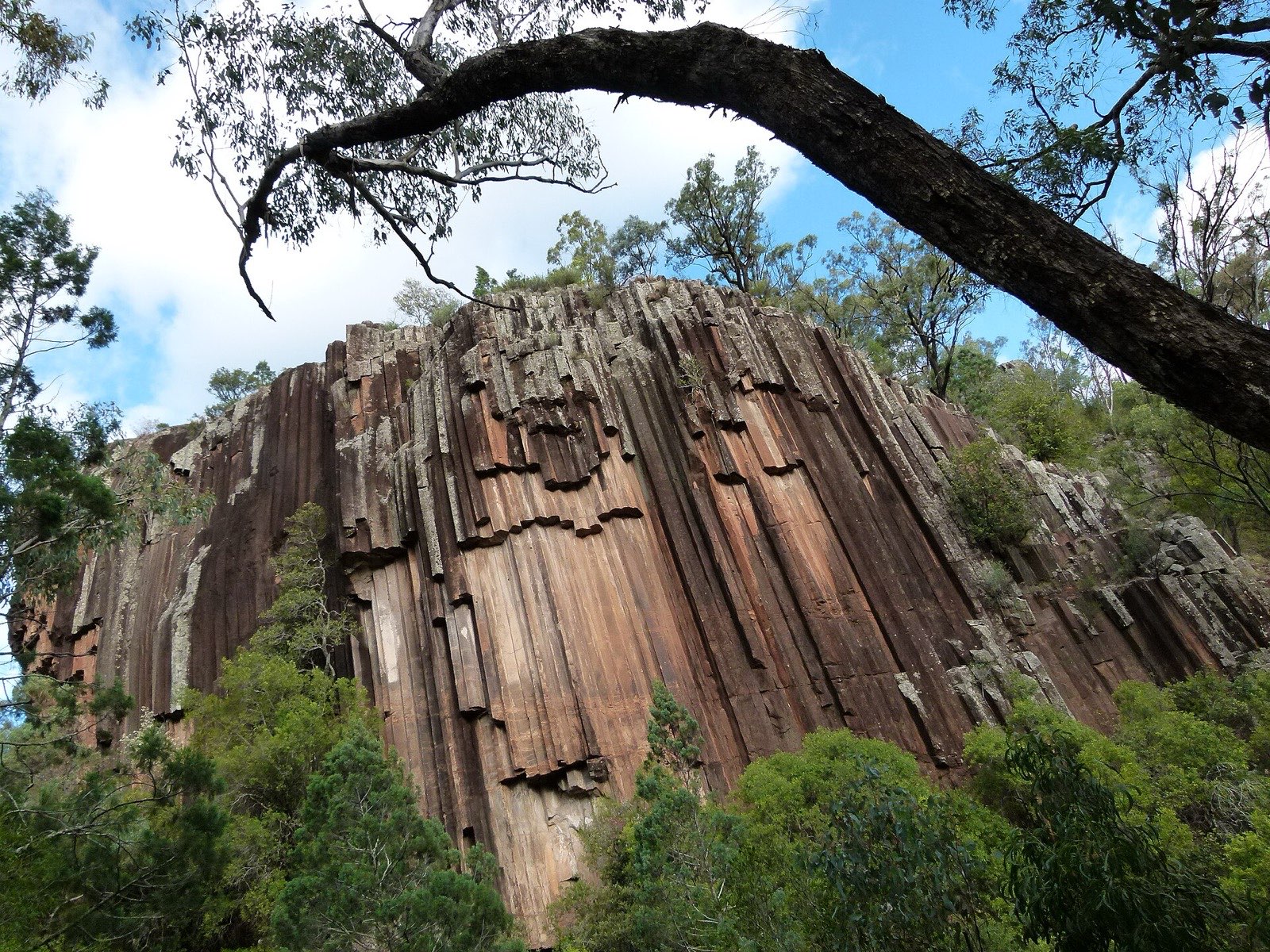
Chapter 01
A plain of lava
About 2.5 to 2.8 million years ago, basalt lava flooded the valley. It belongs to the Western Volcanic Plains, among the largest lava plains in the world.
Location
Organ Pipes National Park, VIC
Rock
Basalt (Newer Volcanics)
Age
~2.5–2.8 Ma
Process
Columnar jointing
Status
National Park since 1972
Overview
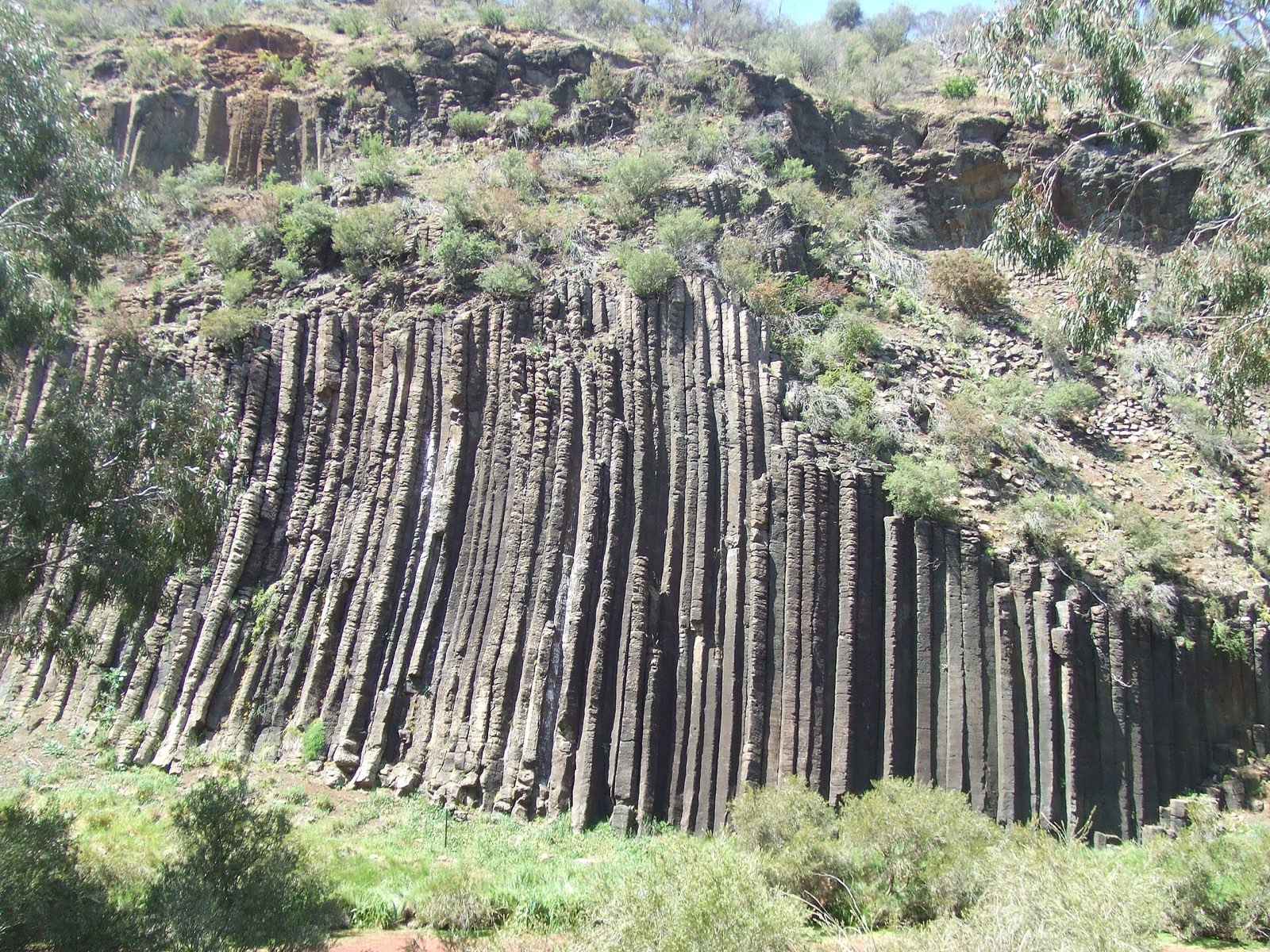
Twenty kilometres from central Melbourne, a creek has cut down through an old lava flow and exposed a wall of basalt columns up to 20 metres tall, each one roughly a metre across.
20m
Height of the tallest columns
~1m
Typical column width
2.5Ma
Approximate age of the basalt
Chapter 01
About 2.5 to 2.8 million years ago, basalt lava flooded the valley. It belongs to the Western Volcanic Plains, among the largest lava plains in the world.
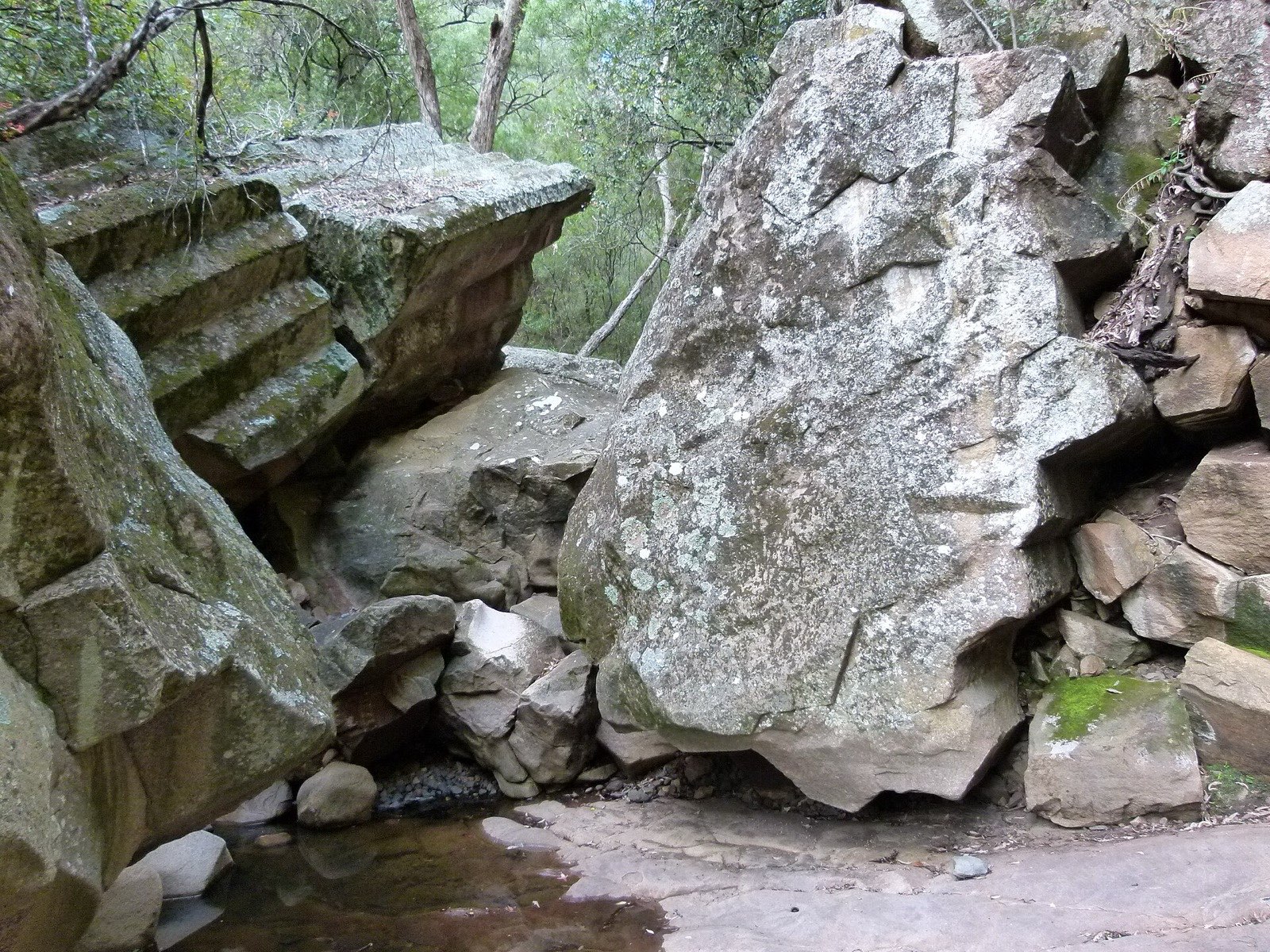
Chapter 02
As the thick flow cooled it shrank. Tension built up in the rock until it cracked into a network of polygons, mostly hexagons, that grew inward from the cooling surfaces as columns.

Chapter 03
Jacksons Creek later cut down through the flow and exposed the columns. Nearby Rosette Rock shows columns radiating like the spokes of a wheel, and a tessellated pavement shows their tops.
Chapter 04
A shrinking surface relieves stress most efficiently by cracking into shapes that meet at about 120 degrees. That favours hexagons, the same geometry found in drying mud and honeycomb.
Chapter 05
Downstream, columns radiate from a centre like spokes. They grew perpendicular to the surfaces that cooled them, so their direction maps where the heat escaped.
How it forms
Basalt lava floods the valley in a thick flow.
The top and base of the flow lose heat first; the rock begins to contract.
Contraction cracks spread as a polygon network, mostly hexagons, that grows inward.
A creek cuts through the flow, exposing the cracks as tall columns.
Nobody cut these hexagons. The lava did, as it cooled and pulled itself apart.
The question
Cracks start at the cooling surfaces and grow inward, perpendicular to them. As the whole flow cools, each crack advances step by step, turning a flat polygon pattern into long parallel prisms.
Columnar jointing
Deep time
~2.5–2.8 Ma
Eruption
Lava from the Newer Volcanics covers the Western Volcanic Plains.
Cooling
Jointing
The flow contracts and cracks into hexagonal columns.
Later
Incision
Jacksons Creek cuts down and exposes the column wall.
1972
Protected
Organ Pipes is declared a National Park.
Field record
Field data
IGMA simulation · move to heat
Rock Lab
Turn a 3D model of Organ Pipes with hand gestures, heat its surface with your fingertip and weather it through 250,000 years.
Enter the Rock LabPhotography
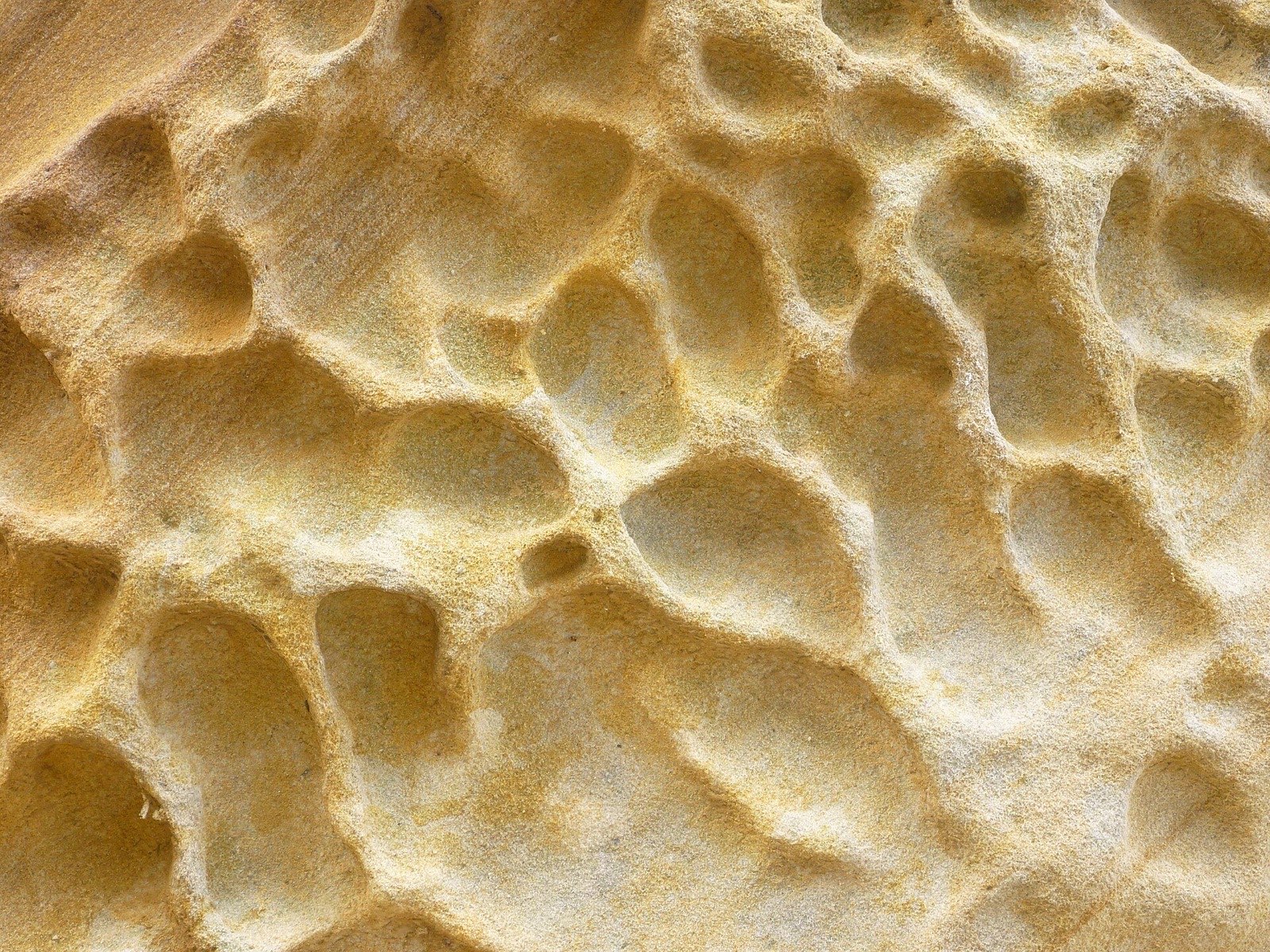
Next case · 01
The honeycomb coast